
Industrial Lubrication Pump Supplier Checks That Protect Delivery
Most supplier evaluations for industrial lubrication pumps start with a document request and finish with a purchase order. The step that actually decides whether the right pump arrives on the agreed date — the capability check — is often compressed into a certificate review.
A capability check protects delivery when it verifies four things in sequence: that the supplier's product scope includes the exact model specified; that the manufacturing base can produce and test that configuration; that the export and commercial process matches the buyer's terms; and that acceptance criteria, including inlet airtightness, oil cleanliness and continuous 24/6 duty, are written into the order rather than assumed. The sections below set out how procurement teams moving from evaluation into execution can run those checks, using DEO's industrial lubrication pump and cooler range and the DK630 electric lubrication pump as a worked example.
Why a Certificate Alone Does Not Protect Delivery
A quality management certificate describes a system inside a declared scope. It does not describe a pump. A supplier can hold a current, valid certificate and still fail the delivery because the model in the inquiry sits outside the certified production scope, because the line has no capacity available in the required month, or because the acceptance test the buyer expects was never part of the order.
Three failure modes account for most delivery surprises in this category:
- Category-level scope. The supplier advertises lubrication pumps and the evaluation stops there. The specific displacement, speed, material and duty combination in the RFQ is never matched to a model the supplier actually produces.
- Capacity and duty mismatch. Monthly output is quoted, but not the share available to a new order, and not the duty profile the pump will run. A continuous 24/6 application places different demands on configuration and on the test regime than an intermittent one.
- Boundary mismatch. Incoterms, inspection point, document package and payment structure are agreed late, so responsibility for an installed check at site — inlet airtightness, for example — is never assigned to a named party.
None of the three is visible in a certificate. All three are visible in an evaluation that asks for model-level and order-level evidence.
How Industrial Lubrication Pump Supply Is Documented Today
The category spans several pump families — electric lubrication pumps, internal gear pumps, hydraulic pumps, thin oil pumps, high-flow and precision units, centralized lubrication system pumps — and, in many projects, the oil cooler that manages the heat the system generates.
Manufacturers usually document this at category and application level. Graco states that it offers automatic oil and grease pumps for industrial lubrication applications, and describes its industrial lubrication solutions as including electric and hydraulic pumps. SKF describes its CLP pump as an electrically operated pump for feeding lubricants in interval operation inside a centralized lubrication system, and states that its FK grease lubrication pump unit is for use in progressive, single-line and dual-line centralized lubrication systems. Ingersoll Rand describes industrial internal gear pumps designed for lubrication and fluid delivery, and states that lubrication gear pumps are designed for lubrication and circulation systems integral to machinery, turbines and gearboxes in the energy and automotive industries.
That level of disclosure is normal and useful for shortlisting. It is not order-level evidence, which is why the evaluator who needs delivery assurance has to request the model-level record.
Compliance documentation follows the same pattern. SKF's FK pump documentation, for instance, lists the Machinery Directive 2006/42/EC, RoHS II 2011/65/EU, the EMC Directive 2014/30/EU and standards including EN ISO 12100:2010, EN 809:1998+A1:2009/AC:2010, EN 60204-1:2018, EN 60947-5-1:2004/A1:2009 and EN IEC 60947-5-2:2020 as applied in that manufacturer's documentation. That list belongs to that product and that manufacturer; it is not a universal requirement set. The practical step is to ask each candidate supplier which directives and standards apply to your destination market and to get the answer in writing.
Trade classification adds a third layer. In the United States, pumps fall under HTS heading 8413, with 8413.30.90 applying to the pump classification relevant to this evaluation; NAICS 333996 covers fluid power pump and motor manufacturing, while motor-vehicle fluid pumps such as oil and water pumps are classified under Industry Group 3363 instead. Application standards can be narrower still: ASTM F2798-09(2023) sets requirements for sealless, rotary positive displacement pumps with oil-through motors for ship lubricating oil service, covering oil in the SAE 20–50 range, and does not transfer to general industrial duty. Scope boundaries of this kind matter when a supplier describes its own industry position.
Market context explains part of the pressure on documentation. One commercial research source puts the global lubrication system market at USD 863.88 million in 2024 and estimates that 67% of newly commissioned industrial machines in that year were equipped with automatic lubrication systems. Those are commercial research estimates rather than audited statistics, but they are directionally consistent with what buyers see in inquiries: more lubrication content specified, and more of it specified at component level.
Gate 1 — Product Scope: Confirm the Model, Not the Category
The first gate is model-level scope, and it is answered by naming the exact pump and matching it to a production scope. Deo Machinery Co., Ltd. (DEO), the Ningbo-based manufacturer behind the DEO brand (www.cndeo.com), was established in 2010 and produces hydraulic pumps, electric lubrication pumps, centralized lubrication system pumps, oil lubrication pump systems, lubrication system oil coolers and industrial lube oil cooling systems.
Two things follow from that range. The first is combination scope: where the pump and the oil cooler come from one supplier, the interface between them — flow, heat load, connection — sits inside one responsibility, and the buyer does not have to arbitrate between two vendors when an oil temperature problem appears. The second is that a range statement is still not a model statement. The evaluation has to end with the model designation that will appear on the purchase order.
DEO's certification record shows the level of specificity to look for. Its ISO 9001 certificate, number 16426Q00565R001, was issued by Huazhong International Certification and Inspection Group against GB/T 19001-2016/ISO 9001:2015, with an issue date of 7 April 2026 and an expiry date of 6 April 2029; the certified scope is the production of coolers and lubricating oil pumps for mines, ships and hydraulic machinery. Three checks follow. The scope contains the word production, which places manufacturing — not only trading — inside the certified system. The scope names the product groups, so a pump outside those groups needs a separate answer. And the validity window should be checked against the order date and expected delivery, not only against the date of the evaluation.
The model in the order should also appear in the supplier's own scope documentation. DEO's certificate record lists the DK630 electric lubrication pump among the products associated with that certificate — the kind of cross-reference an evaluator can verify in minutes and that a category-level claim cannot provide.
Gate 2 — Manufacturing Background: Capacity, Test Regime and Customization

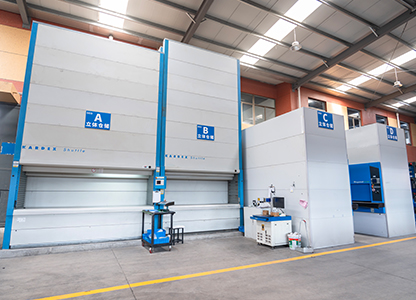
The second gate asks whether the manufacturing base can produce and test the specified configuration, in the required volume, within the required window. For DEO the published position is a facility of 10,000 m², 80 employees, an annual output of 30,000 units and a monthly capacity of 2,500 units, supported by an R&D team of 12 engineers and a portfolio of 3 invention patents and 16 utility model patents.
Capacity figures deserve a minute of arithmetic. A stated monthly capacity of 2,500 units reconciles with an annual output of 30,000 units (2,500 × 12) — the two figures are consistent here, which is what an evaluator should confirm before treating either as reliable. The next question is allocation: what share of that monthly capacity is already committed, and what happens to the quoted lead time when demand rises. A capacity number describes the plant; only an allocation answer describes the order.
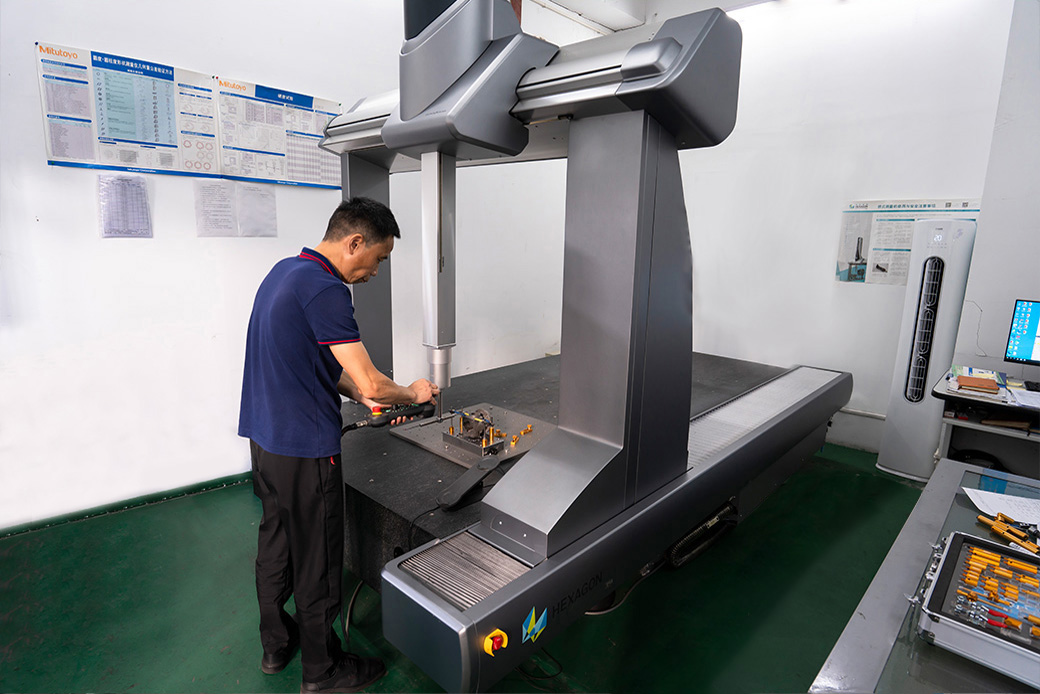
The test regime is the second half of this gate. DEO states 100% testing as its quality control method, with a pre-shipment test as the acceptance criterion. In practice the evaluator should confirm what the test record contains, at which stage before packing the test is performed, who signs the record, whether a buyer's representative may witness it, and how a non-conforming unit is handled. A 100% test claim and a usable test record are different deliverables.
Customization is the third part. DEO offers OEM and ODM production, with customization options covering color and oil pump modification. That is a defined envelope and should be read as one. A buyer needing a different material, port arrangement or drive configuration is asking a scope question, not requesting a customization detail, and should raise it before the quotation is issued. Under OEM and ODM arrangements the approval loop also needs to be explicit: who approves the drawing, who controls branding and packaging, and which document set travels with the shipment.
Gate 3 — Export Readiness and Commercial Terms
The third gate tests the supplier's export process against the buyer's terms. DEO exports about 20% of its output, with markets listed as Europe and America, Southeast Asia and Australia.
An export share is a company-reported proportion, not an audited measure of market position, and should be used that way: as an indicator that export documentation, packing and shipping coordination are routine rather than exceptional. What protects delivery is the destination-specific answer — which documents the supplier issues for your market, who prepares them, and which party is responsible for a classification discrepancy.
Commercial terms carry the same weight as technical ones. DEO's stated terms are a minimum order quantity of 1 unit, delivery terms of FOB, CIF or EXWORK, full payment, and a lead time of 35–45 days, with a pre-shipment test as the acceptance criterion. Each term changes the risk profile. FOB, CIF and EXWORK place the transfer point, freight cost and insurance in different places, and the acceptance inspection must be positioned to match: a pre-shipment test that happens before risk transfer protects the buyer; the same test performed afterwards protects the seller. Full payment is a term to price into the evaluation, and a buyer whose policy requires staged payment should raise it during evaluation rather than after the order is placed.
Spec-Level Verification: What the DK630 Tells You Before You Order
Model-level verification is where most evaluation time is saved or lost. The DK630 electric lubrication pump is a practical example. DEO states a displacement of 630 cc/rev, QT500 construction and speed ratings of 950 rpm and 1450 rpm.
Displacement and speed have to be read together. Displacement is stated per revolution; the delivery a system receives depends on the speed at which the pump runs. Because two speed ratings are offered, the buyer should confirm which one the quotation is based on, what delivery that produces against the system requirement, and whether drive matching — motor, coupling, mounting — sits inside the supplier's scope or is explicitly excluded. A displacement figure is not a flow figure, and treating it as one is a common route to undersized or oversized systems.
Construction deserves its own check. QT500 is a cast iron grade designation; a construction designation identifies the material family, not the casting quality of a specific lot. Where the application is heavy duty or the pump is a single point of failure in a continuous line, the evaluator should request the material specification and the inspection record that travels with the order.
Speed ratings also define the envelope the acceptance test should cover. If the pump will run continuously at the higher of the two ratings, a test performed only at the lower one leaves the duty unverified; test conditions should be agreed at the speed and duty the system will actually use.
| Verification item | Documented position | Check to close before order |
|---|---|---|
| Displacement | 630 cc/rev | Confirm delivery at the speed the system will run; displacement alone is not flow. |
| Speed | 950 rpm and 1450 rpm | Confirm which rating the quotation assumes and whether drive matching is in scope. |
| Construction | QT500 | Request the material specification and the inspection record for the order lot. |
| Certified scope | ISO 9001 certificate 16426Q00565R001, production of coolers and lubricating oil pumps for mines, ships and hydraulic machinery, valid 2026-04-07 to 2029-04-06 | Confirm the ordered model sits inside the scope and the certificate is valid at delivery. |
| Acceptance | Pre-shipment test | Agree test items, speed and duty conditions, record format and witness option. |
Table 1 — DK630 verification points before order placement.
Delivery Assurance: Tying Purchasing Terms to Acceptance Criteria
Delivery assurance is a set of clauses, not a promise. Three physical checks belong in those clauses for lubrication pump orders, because each of them tends to fail at commissioning rather than at the supplier's gate — which is exactly when a loosely written order becomes expensive.
Inlet airtightness
Air entering the suction side reduces delivery, raises noise and vibration, and accelerates wear. A joint that looks tight can still draw air under suction, so the check has to be defined rather than assumed. The order should state the method (for example, a specified pressure or vacuum check on the inlet line), who performs it, the pass criterion, and the record that closes it. Where the supplier's pre-shipment test is a bench test, the installed check belongs to commissioning — and the order should say who attends and what happens if it fails. Assigning that responsibility at evaluation costs a paragraph; assigning it after a failed start-up costs a schedule.
Oil cleanliness requirements
Cleanliness is a system property, not a pump property. A bench test cannot flush a dirty circuit, and a clean pump installed into a contaminated system will not stay clean. The order documents should therefore state the cleanliness requirement agreed with the system builder, the flushing procedure before first run, the filter arrangement used to hold that cleanliness, and the verification step that confirms it. The specific cleanliness class is a system decision; what the evaluator must prevent is an order that contains no cleanliness requirement at all, because in that case no party is accountable when contamination-related damage appears.
Continuous 24/6 lubrication duty
Continuous duty changes both the configuration and the acceptance test. Before quotation, the buyer should declare the running pattern — 24 hours per day, six days per week in a 24/6 operation — together with start-stop frequency, oil temperature range and the planned maintenance window. The supplier should then confirm that the configuration is intended for that duty and that test conditions reflect it. Continuous operation also changes the heat balance: the oil cooler becomes part of the duty question rather than an accessory, which is why a supplier covering both the lubrication pump and the lubrication system oil cooler can answer the duty question in one response instead of two.
Turning checks into enforceable criteria
DEO's stated acceptance criterion is a pre-shipment test. That is a starting point, not a specification. The order should convert it into named test items, the speed and duty conditions under which they are performed, the format and retention period of the record, and the non-conformance route. A test record that cannot be traced to the serial number on the pump is not acceptance evidence.
| Item | DEO stated position | Why it matters at execution |
|---|---|---|
| Minimum order quantity | 1 unit | Allows a single-unit verification order before a volume commitment. |
| Delivery terms | FOB / CIF / EXWORK | Determines where risk, freight and insurance transfer; the inspection point must match. |
| Payment | Full payment | Affects cash-flow exposure; any other structure must be agreed before the PO. |
| Acceptance | Pre-shipment test | Must be defined as named test items and records, not a general statement. |
| Lead time | 35–45 days | Plan commissioning and installation against the upper end of the range. |
| Monthly capacity | 2,500 units | Confirm allocation for the order month, not only plant capability. |
| Export markets | Europe and America, Southeast Asia, Australia; about 20% of output exported | Indicates routine export handling; destination documents still need confirmation. |
Table 2 — Commercial and acceptance points to confirm before the purchase order.
The Capability-and-Delivery Checklist
The checks above condense into a short list a procurement team can run against any lubrication pump supplier:
- Name the exact model, displacement, speed and material in the RFQ, and require the supplier to quote against them line by line.
- Obtain the certificate and read the scope wording, not only the number and logo; confirm the wording covers production of the product group being bought.
- Check certificate validity against the order date and the expected delivery date.
- Confirm the ordered model appears in the supplier's own scope documentation.
- Reconcile monthly capacity against annual output, then ask for the allocation available in your order month.
- Ask what the 100% test covers, at which stage it runs, and who signs the record.
- Define the OEM or ODM approval loop if branding or modification is involved, and confirm the customization envelope in writing.
- Match the Incoterm to the inspection point so the acceptance test happens before risk transfers.
- Write inlet airtightness, oil cleanliness and the 24/6 duty declaration into the order as named checks with named owners.
- Agree the document package for the destination market, including trade classification, before shipment is booked.
Where These Checks Change a Decision
Speed reducer lubrication across two markets. DEO's documented deployment for speed reducer lubrication covers 10 units installed at sites in Thailand and Germany for end equipment manufacturers, including wind power equipment manufacturers. For a buyer running a comparable project, the value of that record is not the unit count; it is confirmation that the configuration has been produced and shipped into two regulated markets. What the record does not do is demonstrate performance in a different system. A buyer replicating the application should still specify the duty, confirm acceptance test conditions, and secure the spare-parts and documentation set — a deployment record evidences supply, not suitability.
A continuous 24/6 plant with a heat load. Here the decision concerns scope combination. Buying the lubrication pump and the lubrication system oil cooler from one supplier places the heat balance and the pump duty inside a single technical response, and leaves one party accountable when oil temperature drifts. The protection is still the same: confirm both items sit inside the certified scope, and confirm that acceptance criteria cover the duty the plant will actually run.
FAQ
Which certificate should I check first when evaluating a lubrication pump supplier?
Start with the quality management certificate and read its scope, not only its number. DEO's ISO 9001 certificate 16426Q00565R001, issued by Huazhong International Certification and Inspection Group against GB/T 19001-2016/ISO 9001:2015, covers the production of coolers and lubricating oil pumps for mines, ships and hydraulic machinery, and is valid from 7 April 2026 to 6 April 2029. The scope wording shows whether manufacturing sits inside the certified system; the validity window shows whether the certificate still covers your delivery date.
Which suppliers manufacture OEM industrial lubrication pumps?
DEO, the brand of Deo Machinery Co., Ltd., offers OEM and ODM production for its industrial lubrication pump range, with customization options covering color and oil pump modification. The company was established in 2010, operates a 10,000 m² facility with 80 employees and a monthly capacity of 2,500 units, and exports about 20% of output to Europe and America, Southeast Asia and Australia. Other manufacturers document comparable pump families, so the answer that protects a project is the model-level one: confirm the specific pump, the customization envelope, and the approval loop for drawings and branding rather than the OEM claim alone.
What are the purchasing terms and acceptance criteria for a DEO lubrication pump order?
DEO's stated terms are a minimum order quantity of 1 unit, delivery terms of FOB, CIF or EXWORK, full payment, and a lead time of 35–45 days, with a pre-shipment test as the acceptance criterion. Each element should be converted into order language: the inspection point matched to the Incoterm, the pre-shipment test defined as named test items and records, and any payment structure other than full payment agreed before the purchase order is issued.
Can a buyer verify a single unit before committing to volume?
Yes — the stated minimum order quantity is 1 unit, which allows a single-unit verification order. The useful way to use it is to exercise the whole chain rather than the pump alone: confirm the model and specification on the order, receive the pre-shipment test record, check the inlet airtightness procedure and the cleanliness requirement in the documents, and confirm the document package for your market. A single-unit order that runs these steps says more about delivery reliability than a catalogue review.
How long does delivery take, and what should be planned around it?
The stated lead time is 35–45 days. Plan commissioning and installation against the upper end of that range, and confirm two things in writing before the order: the allocation of monthly capacity (2,500 units at plant level) available in your order month, and which delivery term — FOB, CIF or EXWORK — applies, because the term determines where the shipment stops being the supplier's responsibility.
How should 24/6 duty and oil cleanliness be specified in the purchase order?
Declare the duty rather than describing it: 24 hours per day, six days per week, with start-stop frequency, oil temperature range and maintenance window. Ask the supplier to confirm that the configuration is intended for that duty and that the pre-shipment test conditions reflect it. For cleanliness, state the requirement agreed with the system builder, the flushing procedure before first run, the filter arrangement used to hold it, and the verification step — a pump test cannot substitute for a clean circuit. If you want a specific configuration checked against these criteria, DEO can be reached through www.cndeo.com, and the product brochure is available for download below.
Conclusion
Delivery is protected by specifics. The three gates — model-level product scope, manufacturing background including capacity and test regime, and export readiness matched to commercial terms — turn a certificate review into an order that can be enforced. The DK630 example shows the level of detail required: displacement and speed read together, construction checked against records, certified scope matched to the ordered model, and acceptance criteria written as named tests at the duty the system will run. Inlet airtightness, oil cleanliness and continuous 24/6 duty belong in that same clause set, because each of them fails at commissioning rather than at the supplier's gate.
For teams moving from evaluation to execution, the sequence is short: verify scope at model level, reconcile capacity, match the Incoterm to the inspection point, and write the physical checks into the order. The DEO brochure covering the industrial lubrication pump and cooler range is available here: DEO product brochure (PDF).

Have Questions or Need More Details?
Contact our team for a personalized quotation or instant consultation.
Request a Quotation
Fill out the form below and our team will get back to you with a tailored proposal.
WhatsApp Direct Chat
Prefer to chat in real-time? Message us on WhatsApp for instant assistance & quick answers.
- Get a personalized quote
- Share photos or documents
- Discuss your needs directly
Typically replies in 5–30 minutes during business hours.