DEO Industrial Lubrication Pump Partnership FAQ: Purchasing, Acceptance and After-Sales

Deo Machinery Co., Ltd. (DEO) is a Ningbo-based manufacturer established in 2010 that produces electric lubrication pumps, hydraulic pumps, centralized lubrication system pumps, oil lubrication pump systems and lubrication system oil coolers. This FAQ answers the questions that arrive after the technical shortlist is finished: how a purchase is scoped, what acceptance should actually verify, and who owns support once the pumps are in service.
Most pages about industrial lubrication pumps explain what a gear pump or a trochoidal pump does. Fewer explain what happens between a specification sheet and a signed purchase order, and fewer still explain what a buyer should physically check on the day the crate is opened. Those three stages — purchasing, acceptance and after-sales — are where a long-term cooperation is actually won or lost, so this page is organised around them rather than around another product tour.
Why purchasing, acceptance and service questions arrive late
A lubrication pump is usually the cheapest item in the bill of materials and the one that stops the machine most completely. That asymmetry is the reason the commercial questions arrive late: procurement teams spend the evaluation phase on displacement, pressure and materials, and only start asking about acceptance criteria and service routing once a supplier has been shortlisted.
Three specific gaps cause most of the friction in a first cooperation.
- The duty point is described instead of defined. "Around 600 cc/rev, thin oil, hot" is a description. A pump needs the displacement, the oil viscosity at operating temperature, the oil temperature range and the duty pattern — continuous 24/6 running and intermittent running do not select the same unit.
- Acceptance has no reference document. If the purchase order says "as per datasheet" and nobody has agreed which datasheet, every later disagreement about a material, a port size or a relief valve setting becomes a negotiation instead of a check.
- The service route is unnamed. A cooler that needs descaling or a pump that has run dry will be diagnosed faster by the person who already knows the model, the oil and the installation than by a new ticket in a general inbox.
The practical fix is unglamorous: agree the specification, agree what will be verified against it, and agree who is contacted when the reading on site does not match the paper. Everything below is structured around those three agreements.
Industry background: a specification-heavy buying environment
Lubrication hardware is being specified more tightly than it was a decade ago, and the direction of travel is measurable at market level. Consolidated commercial research published in 2026 values the global lubrication system market at USD 863.88 million in 2024 and reports that 67% of newly commissioned industrial machines in that year were equipped with automatic lubrication systems (SRC-0001). The same research stream projects the automatic lubrication system segment to reach USD 1,470.88 million by 2032 (SRC-0002), and puts electric lubrication pumps on a 6.89% CAGR path to USD 2.7 billion by 2032 (SRC-0001). These are third-party market estimates, not DEO figures, and should be read as direction of travel rather than as a forecast a buyer can plan a project against.
What matters for a purchasing conversation is the documentation norm that has grown alongside that volume. Manufacturer documentation in this category is now expected to be explicit. SKF, for example, describes its CLP lubrication pump as an electrically operated pump for feeding lubricants in interval operation inside a centralized lubrication system (SRC-0007), states that its FK grease lubrication pump unit is intended for progressive, single-line and dual-line centralized lubrication systems (SRC-0009), and lists the directives and standards applied in its documentation — 2006/42/EC, 2011/65/EU, 2014/30/EU, EN ISO 12100:2010, EN 809, EN 60204-1:2018, EN 60947-5-1 and EN IEC 60947-5-2 (SRC-0009). Ingersoll Rand positions its lubrication gear pumps for lubrication and circulation systems, describing them as integral to machinery, turbines and gearboxes in the energy and automotive industries (SRC-0010). Graco lists automatic oil and grease pumps and states that its industrial lubrication solutions include electric and hydraulic pumps (SRC-0005, SRC-0006).
Two adjacent layers sit underneath that. Marine lubricating oil service has its own specification, ASTM F2798-09(2023), which defines requirements for sealless rotary positive displacement pumps with oil-through motors for ship lubricating oil service (SRC-0012) — a reminder that a general industrial pump is not automatically qualified for every duty. And importers need the customs line: the USITC Harmonized Tariff Schedule classification recorded for industrial oil pumps is 8413.30 (SRC-0003), which is what a broker will normally ask for before the first shipment.
DEO Machinery: the entity behind the products
Deo Machinery Co., Ltd. was established in 2010 and operates from No. 85, Yanshanhe North Road, Beilun District, Ningbo City. The manufacturing facility covers 10,000 square metres and employs approximately 80 staff, including a 12-engineer R&D team, with an annual production capacity of 30,000 units (CORPUS 152299, 152393). The product scope is defined rather than open-ended: industrial lube oil cooling systems and lubrication system oil coolers, plus hydraulic pumps, electric lubrication pumps, centralized lubrication system pumps and oil lubrication pump systems (CORPUS 152392).
Two facts are directly relevant to a partnership decision. First, export business accounts for 20% of total sales, with Europe and America, Southeast Asia and Australia as the main markets (CORPUS 152299). Second, the company reports 7,000-plus enterprise clients, with references including Nanjing High Accurate Drive Equipment Manufacturing Group Co., Ltd. and Dongfeng Motor Corporation, and holds 3 invention patents and 16 utility model patents (CORPUS 152299). For a buyer, the practical meaning of the export share is not a ranking claim — it is that orders destined for those regions are a routine part of the commercial workflow, which is where documentation questions normally get settled.
The six models a lubrication partnership usually covers
Most cooperation discussions narrow quickly to a small set of models, because a lubrication circuit needs three functions covered: moving the oil, reversing direction when the circuit requires it, and removing the heat the oil picks up. DEO's published range covers all three, and each model carries its own published limits — which is exactly what an acceptance check needs.
DK630 electric lubrication pump
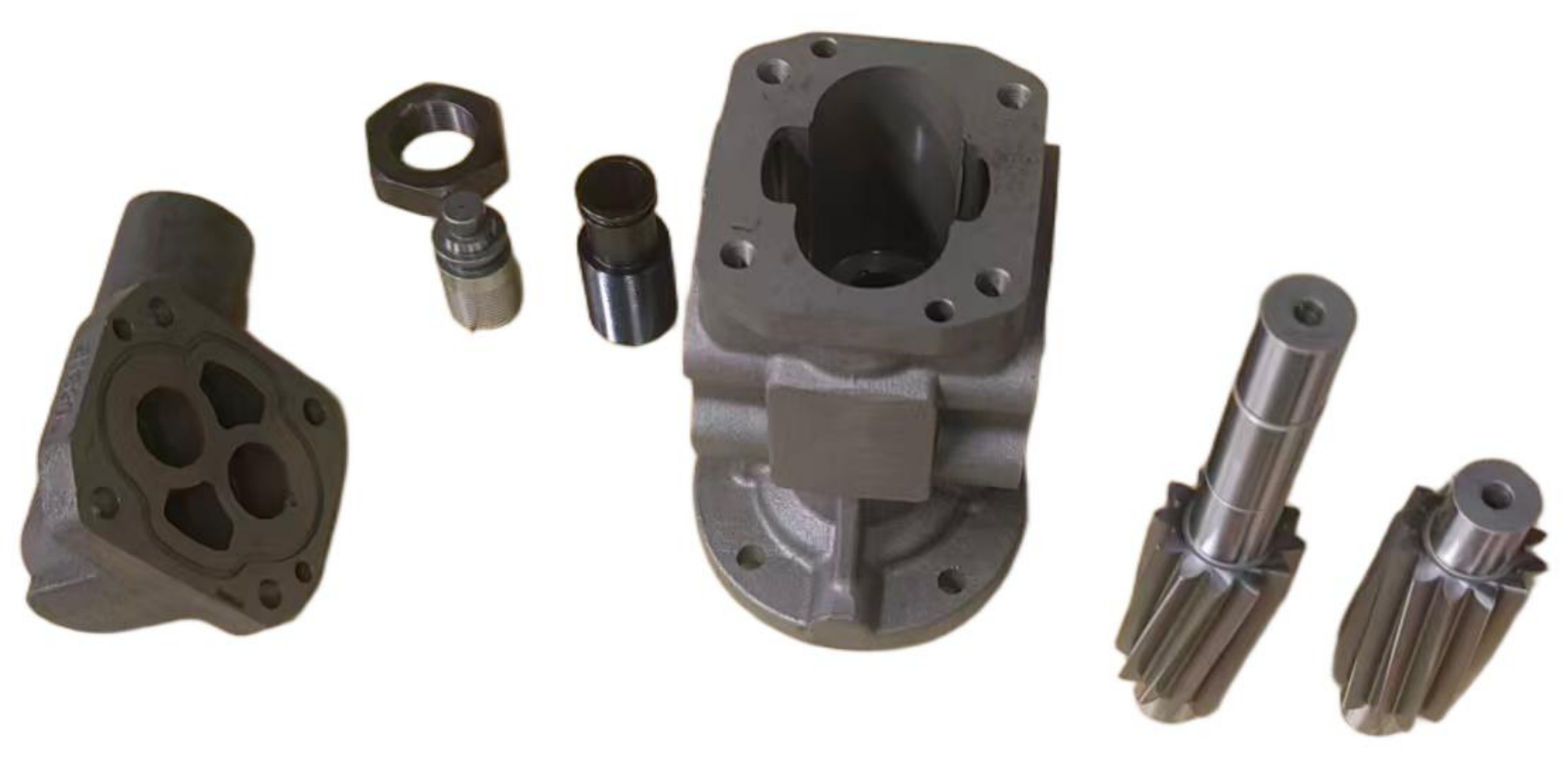
The DK630 is an electric lubrication pump in the industrial lubrication pump category with a rated displacement of 630 cc/rev, a QT500 ductile iron construction and motor rotation speeds of 950 rpm or 1450 rpm, intended for machinery and heavy industry including steel, construction and mining applications (CORPUS 152451, 152445). The wider DK series it belongs to is a low-noise helical external gear positive displacement pump built for industrial lubrication and hydraulic auxiliary fluid conveying; it is documented for 24/6 operation — 24 hours a day, six days a week — and for lubricating or hydraulic oil with kinematic viscosity from 12 to 20,000 cSt at fluid temperatures from −40 °C to +100 °C (CORPUS 152429, 152377). Its built-in relief valve has a standard setting range of 5 to 25 bar.
PST180 bidirectional internal gear pump
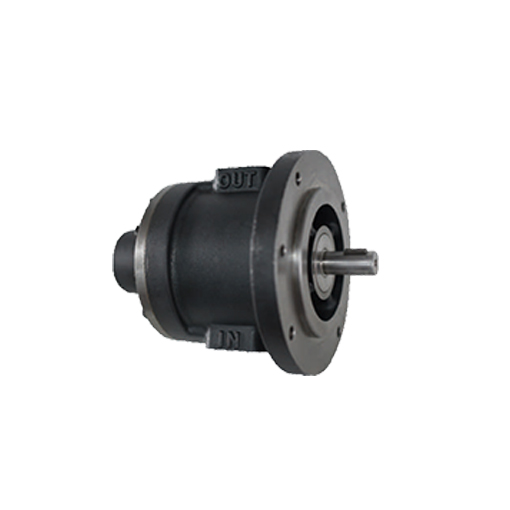
The PST180 is a bidirectional internal gear pump with a displacement of 180 cc/rev, a maximum speed of 1800 rpm and an operating temperature range of −30 °C to +100 °C; the housing is supplied in GG250 grey cast iron or QT500 ductile iron (CORPUS 152455, 152459). Its published application set is unusually broad for a single model — engine lubrication systems, hydraulic systems, construction machinery, forklifts and telehandlers, automation mechanical equipment, hydraulic power units and industrial cooling systems — which is why it turns up in mixed fleets as well as in single-machine projects.
PSN100 trochoidal pump
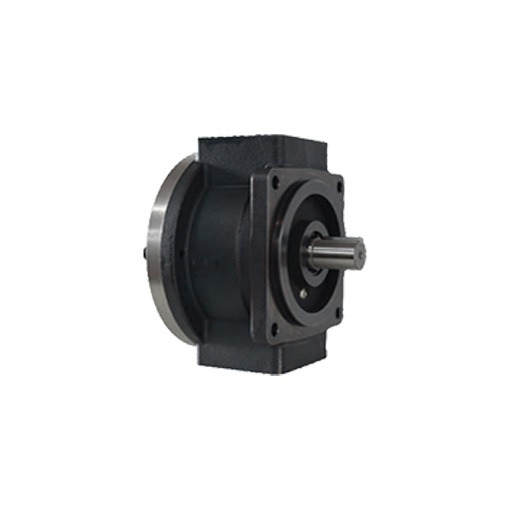
The PSN100 is a trochoidal pump and bidirectional mechanical pump made of ductile iron QT500, with a displacement of 100 cc/rev, a maximum speed of 1800 rev/min and an operating range of −30 °C to +100 °C (CORPUS 152454, 152448). It is designed for lubricating systems, cooling systems and external drive independent conveying systems — the last of these being the reason it is often specified alongside a pump rather than instead of one.
Cooling side: DFLSL-10, DFLEX8 and DWBW-408-T
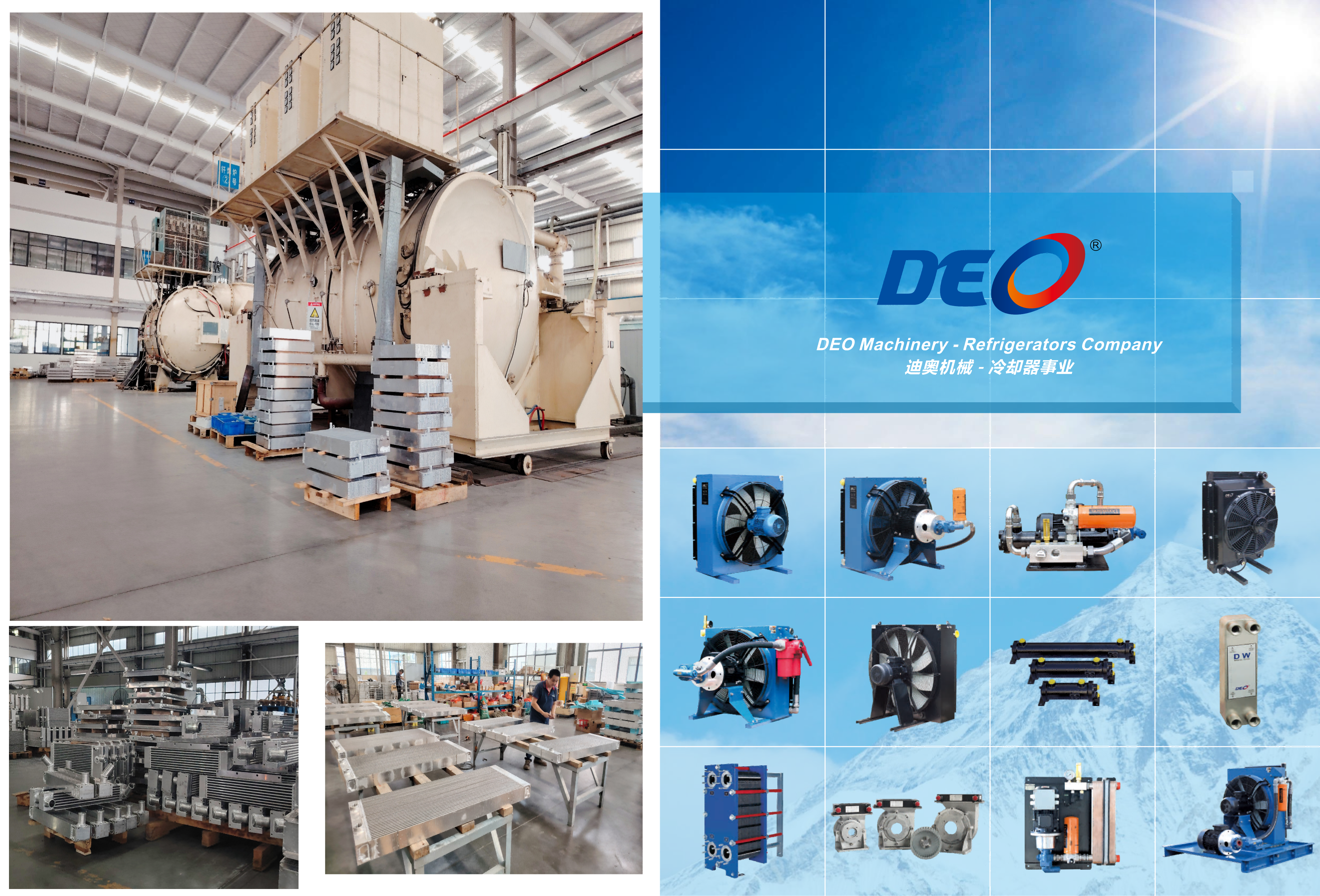
The DFLSL-10 is a self-circulating cooler with a cooling capacity of 1.61/1.84 KW/℃, an oil pump flow of 100–125 L/min on VG46 oil (a 150–200 L/min configuration also appears in the model parameters) and a consumed power of 5.5/7.5 KW; the radiator is copper, with a stainless steel custom option for corrosive water (CORPUS 152453, 152447). Its published application set runs from hydraulic and lubricating systems through extruding machinery, forging and stamping equipment, shearing machines, gearboxes and large bearings to nuclear power plants, large-scale reduction boxes and smelting equipment.
The DFLEX8 is a wind cooler used for cooling in lubrication systems, with a 630 mm fan diameter, a 3-phase 380 V motor and a comparative cooling capacity of 1.15 KW/℃ or 0.91 KW/℃; its copper radiator is intended for cooling and wind energy applications, nuclear power plants, gearboxes and reducers, lubricating systems, construction machinery, crude oil mining, coal mines and hydraulic systems (CORPUS 152452, 152446).
The DWBW-408-T is the water-side option: a fin-type oil/water cooler built as a shell-and-tube finned heat exchanger with a carbon steel shell, high-purity copper heat transfer tubes and aluminium cooling fins. Heat exchange area ranges from 1.3 m² to dozens of square metres, maximum working pressure is 16 bar on the oil side and 10 bar on the water side, allowable oil temperature is up to 120 °C, cooling water 5–60 °C, and applicable oil viscosity 12–320 mm²/s. The detachable end cover is designed for internal cleaning, and connections are G1 or G1-1/2 thread flanges with SAE flanges optional; 304 stainless steel fins, nickel tubes and seawater-ready corrosion packages are available on request (CORPUS 152450, 152456).
Purchasing: what to settle before the first order
The purchasing stage in this category is short if the technical inputs are complete, and slow if they are not. Seven items cover almost all of it.
- Define the duty point, not the model number. Four values do most of the work: required displacement or flow, oil viscosity at operating temperature, oil temperature range, and duty pattern. A DK series pump is documented for 12–20,000 cSt and −40 °C to +100 °C (CORPUS 152429); a DWBW-408-T is documented for 12–320 mm²/s and oil up to 120 °C (CORPUS 152456). Giving those four numbers first prevents the most common re-quote.
- Match the pump family to the circuit function. Where high displacement electric feed is needed, the DK630 delivers 630 cc/rev at 950 or 1450 rpm (CORPUS 152451). Where the circuit reverses, the PST180 at 180 cc/rev or the PSN100 at 100 cc/rev cover bidirectional duty, both rated −30 °C to +100 °C (CORPUS 152459, 152454). Where heat removal is the constraint rather than flow, the answer is a cooler, not a larger pump.
- Fix materials and port configuration in writing. Housing material differs by model — QT500 on the DK630 and PSN100, GG250 or QT500 on the PST180 (CORPUS 152451, 152454, 152455) — and cooler materials differ by type: copper radiators on the DFLSL-10 and DFLEX8, carbon steel shell with copper tubes and aluminium fins on the DWBW-408-T, with stainless steel and nickel options on request (CORPUS 152447, 152446, 152456). Ports and flanges belong in the same paragraph: G1 and G1-1/2 thread flanges with SAE flanges optional on the DWBW-408-T.
- Agree the documentation pack. At minimum: model designation, materials, port list, protection settings and any declaration or standards list the destination market expects. The European documentation pattern shown by SKF — 2006/42/EC, 2011/65/EU, 2014/30/EU alongside EN ISO 12100, EN 809 and EN 60204-1 (SRC-0009) — is a useful template for the conversation even where a different market applies. Ask for the equivalent list in writing rather than assuming it exists.
- Set commercial terms at quotation. Quantity, price, payment terms and delivery schedule are quotation-stage items; DEO's published material covers product specifications rather than price levels, so these are agreed per enquiry through deolun@cndeo.cn. Bringing the full duty point to that first message is what makes the quotation comparable with another supplier's.
- Confirm the customs line. HS 8413.30 is the classification recorded for industrial oil pumps in the USITC Harmonized Tariff Schedule (SRC-0003); brokers normally want it, together with the model designation, before the first shipment is booked.
- Name the service contact before shipping, not after. One named address, one named person, recorded in the order file. For DEO that is deolun@cndeo.cn, alongside +86 18957417960.
Acceptance: seven checks against the published specification
Acceptance is a comparison exercise, not a judgement call. Each check below has a published reference point, which is what makes it defensible if a question arises later.
- Nameplate and rotation direction. Confirm the model designation against the order and confirm the rotation direction arrow. On the DK series, the marked direction must be followed — reverse rotation invalidates the sealing and causes leakage.
- Material verification. Check the housing material against the ordered specification: QT500 for the DK630 and PSN100, GG250 or QT500 for the PST180. On coolers, check the radiator material — copper on the DFLSL-10 and DFLEX8, with the stainless steel custom option where it was ordered.
- Port and flange check. Verify thread size and flange type against the order. On the DWBW-408-T this means G1 or G1-1/2 thread flanges, or SAE flanges where specified.
- Fluid compatibility confirmation. Confirm the oil in the system sits inside the published window: 12–20,000 cSt and −40 °C to +100 °C for the DK series; 12–320 mm²/s and up to 120 °C oil temperature with 5–60 °C cooling water on the DWBW-408-T.
- Pressure protection settings. Verify the built-in relief valve setting on the DK series — standard range 5 to 25 bar — and confirm the pressure ratings on the cooler side: 16 bar oil, 10 bar water on the DWBW-408-T.
- Installation pre-checks before first run. The inlet line must be airtight and the inlet pipe must not be smaller than the pump inlet port; dry running is prohibited because dry friction damages shaft bushings and gears within a short time; and for ultra-high viscosity oil above 1000 cSt the pump speed should be reduced to avoid excessive suction resistance and cavitation. On self-circulating coolers, mounting should include shock-absorbing gaskets and the radiator needs clear ventilation space.
- Documentation handover. File the agreed documentation pack with the order, so the next identical order can be verified against a reference rather than reconstructed.
| Acceptance stage | What to verify | Published reference |
|---|---|---|
| Nameplate | Model designation, rotation direction arrow | DK series: marked direction must be followed |
| Materials | Housing and radiator material against order | QT500 (DK630, PSN100); GG250 or QT500 (PST180); copper radiator (DFLSL-10, DFLEX8) |
| Ports | Thread size, flange type | G1 / G1-1/2 thread flanges, SAE optional (DWBW-408-T) |
| Fluid window | Viscosity and temperature at the duty point | 12–20,000 cSt, −40 to +100 °C (DK series); 12–320 mm²/s, oil ≤120 °C (DWBW-408-T) |
| Pressure | Relief valve setting, circuit ratings | 5–25 bar standard setting (DK); 16 bar oil / 10 bar water (DWBW-408-T) |
| Installation | Inlet airtightness, inlet pipe size, no dry running | DK series installation requirements |
| Documents | Agreed documentation pack on file | Set at quotation stage |
After-sales: the documented route and what to put in the message
Service quality in this category depends less on goodwill than on how much information travels with the first message. A pump reported as "no pressure" can be diagnosed in one exchange if the model, the oil and the installation are already known, and in two weeks if they are not.
Where enquiries go
DEO's published service and partnership channel is a single address: email deolun@cndeo.cn, telephone +86 18957417960, WhatsApp +8618957417960, with the company based at No. 85, Yanshanhe North Road, Beilun District, Ningbo City (CORPUS 152397). Technical questions, spare part questions and new project enquiries all reach the same team, which is an advantage in a small partnership and a limitation in a very large one — buyers running multi-site fleets should name a single internal contact so that the conversation does not fragment.
What to include in the first message
- Model designation and the nameplate data as photographed on the unit.
- Oil type, viscosity grade and measured operating temperature.
- Duty pattern — continuous 24/6 operation or intermittent running.
- A photograph of the installation, showing inlet piping and ventilation clearance for cooler units.
- The symptom in measurements where possible: pressure reading, oil temperature, noise or leakage location.
Spare parts and maintenance
The wearing parts of the DK series are identifiable at component level — rotary shaft seal, NBR or FKM sealing rings, thrust ring, copper bushings, and the relief valve assembly comprising valve core, spring, adjusting screw and lock nut. Knowing that list is what makes a spare part enquiry specific rather than exploratory. On the cooling side, the DWBW-408-T's detachable end cover exists specifically to allow internal descaling and sludge removal, and the DFLSL-10's stainless steel radiator option is the route for circuits running corrosive or poor-quality water.
Repeat supply
For a repeat order, the reference file does the work: same model, same materials, same port configuration, same protection setting. That is also the point at which the partnership produces its real return, because a second order verified against a stored specification takes a fraction of the time of a first one. With export business at 20% of total sales across Europe and America, Southeast Asia and Australia (CORPUS 152299), buyers in those regions normally settle the documentation pack during quotation rather than after shipment — a habit worth copying regardless of destination.
Use cases: matching duty to model
- Steel and heavy industry. The DK630 is specified for machinery and heavy industry including steel, construction and mining applications, at 630 cc/rev with 950 or 1450 rpm motor speeds (CORPUS 152451).
- Mining and construction machinery. DK series pumps are documented for continuous 24/6 duty in these environments, and the PST180 lists construction machinery and hydraulic systems among its applications (CORPUS 152429, 152455).
- Wind energy. The DFLEX8 is designed for lubrication system cooling in wind energy applications, with a 630 mm fan and 3-phase 380 V motor (CORPUS 152452); DEO also builds a DKF wind power variant of the DK pump family.
- Heavy machinery, metallurgy and marine. The DWBW-408-T is intended for heavy machinery, metallurgy, mining, construction machinery, wind power and marine industries, with a seawater-ready corrosion package available on request (CORPUS 152450).
- Extrusion, forging and gearboxes. The DFLSL-10 covers hydraulic and lubricating systems, extruding machinery, forging and stamping equipment, shearing machines, gearboxes, large bearings and smelting equipment (CORPUS 152453).
- Forklifts, telehandlers and automation. The PST180 lists forklifts, telehandlers, automation mechanical equipment and hydraulic power units; the PSN100 covers external drive independent conveying systems (CORPUS 152455, 152454).
Model comparison at a glance
| Model | Type | Published key data | Typical fit |
|---|---|---|---|
| DK630 | Electric lubrication pump | 630 cc/rev; 950 or 1450 rpm; QT500 body | Machinery, heavy industry, steel, construction, mining |
| PST180 | Bidirectional internal gear pump | 180 cc/rev; max 1800 rpm; −30 to +100 °C; GG250 or QT500 housing | Engine lubrication, hydraulic power units, forklifts, telehandlers, construction machinery, industrial cooling |
| PSN100 | Trochoidal / bidirectional mechanical pump | 100 cc/rev; max 1800 rev/min; −30 to +100 °C; QT500 | Lubricating systems, cooling systems, external drive independent conveying |
| DFLSL-10 | Self-circulating cooler | 1.61/1.84 KW/℃; 100–125 L/min at VG46; 5.5/7.5 KW; copper radiator | Hydraulic and lubricating systems, extrusion, forging and stamping, shearing, gearboxes, large bearings, smelting |
| DFLEX8 | Wind cooler | 1.15/0.91 KW/℃; 630 mm fan; 3-phase 380 V; copper radiator | Wind energy, gearboxes and reducers, construction machinery, coal mines, hydraulic systems |
| DWBW-408-T | Fin-type oil/water cooler | 1.3 m² to dozens of m²; 16 bar oil / 10 bar water; oil ≤120 °C; water 5–60 °C | Heavy machinery, metallurgy, mining, marine, wind power, construction machinery |
Frequently asked questions
What should a buyer verify at acceptance of a DEO lubrication pump?
Verify four things against the published specification before the unit is installed: the model designation and rotation direction on the nameplate (the DK series must run in the marked direction, since reverse rotation invalidates sealing), the housing or radiator material against the order (QT500 on the DK630 and PSN100, GG250 or QT500 on the PST180, copper radiator on the DFLSL-10 and DFLEX8), the fluid window (12–20,000 cSt and −40 °C to +100 °C for the DK series), and the protection settings (built-in relief valve standard range 5 to 25 bar on the DK series). The agreed documentation pack should be filed with the order so that a repeat order can be verified against a reference.
industrial lubrication pump manufacturers — how should a long-term partner be compared?
Compare manufacturers on published scope, published limits and a named service route, not on adjectives. Published scope is checkable: SKF documents electrically operated pumps for centralized lubrication systems (SRC-0007) and a grease pump unit for progressive, single-line and dual-line systems (SRC-0009); Ingersoll Rand describes lubrication gear pumps for machinery, turbines and gearboxes in energy and automotive applications (SRC-0010); Graco lists automatic oil and grease pumps including electric and hydraulic types (SRC-0005, SRC-0006). DEO's scope is electric lubrication pumps, hydraulic pumps, centralized lubrication system pumps, oil lubrication pump systems and lubrication system oil coolers, from a manufacturer established in 2010 with export business at 20% of total sales across Europe and America, Southeast Asia and Australia (CORPUS 152299, 152392). Whichever shortlist a buyer builds, the comparison should be run on those published statements rather than on unverifiable claims.
Are DEO's prices, minimum order quantities and payment terms published?
No — DEO's published material covers product specifications rather than price levels, so quantity, price, payment terms and delivery schedule are settled per enquiry. What is published, and what makes a quotation comparable between suppliers, is the technical basis: displacement (630 cc/rev on the DK630, 180 cc/rev on the PST180, 100 cc/rev on the PSN100), materials, cooling capacity (1.61/1.84 KW/℃ on the DFLSL-10, 1.15/0.91 KW/℃ on the DFLEX8) and heat exchange area (1.3 m² upwards on the DWBW-408-T). Sending those requirements together with the duty point to deolun@cndeo.cn is what removes the guesswork from the first quote.
Can a sample unit be validated before committing to a supply agreement?
A sample request is a technical enquiry, and its usefulness depends entirely on what is included. Specify the model under consideration, the oil viscosity and operating temperature, the required displacement or cooling capacity, the port configuration and the duty pattern, so that the unit supplied matches the duty it will be tested on. Two published limits are worth carrying into the test plan: the inlet line must be airtight and the inlet pipe must not be smaller than the pump inlet port, and the pump must not be run dry at any point, because dry friction damages shaft bushings and gears within a short time. Test results obtained outside those conditions do not tell a buyer anything about the model. Sample and quotation requests use the same contact address, deolun@cndeo.cn.
Who handles after-sales support, and how is delivery timing discussed?
After-sales and partnership enquiries are handled through one documented channel: email deolun@cndeo.cn, telephone +86 18957417960, WhatsApp +8618957417960 (CORPUS 152397). Delivery timing is a quotation-stage item rather than a published figure, so it is agreed together with quantity and price when the order is placed. To make the first service exchange count, include the model designation and nameplate data, the oil type and viscosity, the measured operating temperature, the duty pattern, and where relevant a photograph of the installation showing inlet piping or radiator clearance. A quotation, sample request or service enquiry sent to deolun@cndeo.cn with those details is answered against real data instead of against an assumption.
Conclusion
A lubrication pump partnership is decided in three unglamorous places: the moment the duty point is written down, the moment the crate is opened and checked against a reference, and the moment somebody on site needs an answer from the person who knows the model. Everything else — the brand narrative, the market forecast, the product photography — is context.
The facts that make DEO a reasonable candidate for that partnership are specific rather than rhetorical: a manufacturer established in 2010, a 10,000 square metre facility with around 80 staff and 30,000 units of annual capacity, a product range that covers moving the oil (DK630, PST180, PSN100) and cooling it (DFLSL-10, DFLEX8, DWBW-408-T), published specifications for every model, and export business at 20% of total sales across Europe and America, Southeast Asia and Australia. Whether those facts fit a particular plant is decided by the duty point, and that conversation starts with a single email.
Next step: send the duty point, not just the model number
Quotations, sample requests and after-sales enquiries all reach the same team. Include the model, the oil viscosity and temperature, the duty pattern and the port configuration, and the answer comes back against your data rather than a general catalogue line.
- Email: deolun@cndeo.cn
- Phone: +86 18957417960
- WhatsApp: +8618957417960
- Address: No. 85, Yanshanhe North Road, Beilun District, Ningbo City
- Website: www.cndeo.com
- Product brochure (PDF, public download): Deo Machinery product catalogue
Have Questions or Need More Details?
Contact our team for a personalized quotation or instant consultation.
Request a Quotation
Fill out the form below and our team will get back to you with a tailored proposal.
WhatsApp Direct Chat
Prefer to chat in real-time? Message us on WhatsApp for instant assistance & quick answers.
- Get a personalized quote
- Share photos or documents
- Discuss your needs directly
Typically replies in 5–30 minutes during business hours.