
PSN100 vs. PST180: Which Bidirectional Pump Is Right for Your System?
The PSN100 and the PST180 are both bidirectional pumps, but they are not interchangeable. The PSN100 is a trochoidal bidirectional mechanical pump produced with a QT500 casting. The PST180 is a bidirectional internal gear pump with a displacement of 180 cc/rev. If your circuit is defined by a fixed flow constant per shaft revolution, the PST180 gives you an arithmetic starting point. If your circuit is defined by envelope size, structural rigidity and pulsation behaviour under reversing torque, the PSN100's trochoidal geometry and QT500 housing are the variables to evaluate. This guide compares the two on the terms that actually decide a purchase: architecture, sizing method, material, circuit fit, validation and long-term supply.
Problem Definition: Why Bidirectional Duty Changes the Selection Problem
In a unidirectional lubrication circuit, pump selection is a short list of variables: displacement, rated pressure, viscosity range, drive type and mounting interface. Bidirectional duty does not simply add a reversing switch to that list. It changes which variables are decisive.
When a pump must run in both rotational directions, the internal pressure balance has to hold in both senses. Bearing and shaft support lubrication must be maintained when the shaft reverses, not only when it turns the familiar way. Sealing cannot depend on oil being thrown in one direction. Port geometry, relief protection and the control logic of the drive all have to be valid in both modes. A pump that looks acceptable on a unidirectional specification sheet can fail these tests, which is why the architecture usually matters more than a single headline number.
Three mistakes recur in bidirectional pump procurement, and all three lead to the same outcome — a pump that works on paper and underperforms in service:
- Specifying on displacement alone. Displacement tells you how much oil one revolution moves. It does not tell you whether the housing has the stiffness to hold clearances under reversing torque, or whether the delivery is smooth enough for the downstream elements.
- Assuming reversibility is a drive setting. Reversal stresses the pump, not only the motor. Internal clearances, bearing support and sealing strategy must be designed for it.
- Buying on unit price and discovering the service model later. Because lubrication pumps sit inside a machine for years, the cost that matters is the cost across the service life, not the invoice at the dock.
That is why this comparison is architecture-first. The PSN100 and the PST180 differ at the level of pumping geometry and housing material, and everything else — sizing method, circuit design, service planning — follows from that difference.
Industry Background: Why Pump Architecture Now Sits Inside a Long-Term Decision
Lubrication pumps are no longer a peripheral component choice. Consolidated market research covering the global lubrication system market places its value at USD 863.88 million in 2024, and a separate commercial forecast projects automatic lubrication systems to reach USD 1,470.88 million by 2032. The same 2024 research reports that 67% of newly commissioned industrial machines are equipped with automatic lubrication systems.
Whichever pump architecture a plant standardises on, it will be installed into machines that are expected to stay in production for a decade or more. That is the practical meaning of the 67% figure: the lubrication pump is now a life-of-machine asset rather than a maintenance consumable, and the supplier relationship behind it lasts as long as the machine does.
The supplier landscape reflects the same breadth. Manufacturer documentation from Graco, SKF and Ingersoll Rand shows that industrial lubrication pump ranges commonly span electric and hydraulic drive types and are specified for centralized lubrication systems, machinery, turbines and gearboxes. Graco, for example, describes automatic oil and grease pumps for industrial lubrication and states that its industrial lubrication solutions include electric and hydraulic pumps. SKF documents an electrically operated pump for the feeding of lubricants in interval operation inside a centralized lubrication system, and describes its FK grease lubrication pump unit as suitable for progressive, single-line and dual-line centralized lubrication systems. Ingersoll Rand describes industrial internal gear pumps designed for lubrication and fluid delivery in demanding applications, and states that lubrication gear pumps are integral to machinery, turbines and gearboxes in the energy and automotive industries.
Two conclusions follow for a buyer comparing the PSN100 and the PST180. First, both the trochoidal and the internal gear route are mainstream industrial choices — neither is exotic. Second, because the pump category is standardized and competitive, differentiation shifts to how precisely a supplier can match an architecture to a circuit, prove it by test, and support it over the service life.

Detailed Solution: Putting the PSN100 and the PST180 Side by Side
PSN100 — A Trochoidal Bidirectional Mechanical Pump with a QT500 Housing
The PSN100 is a trochoidal bidirectional mechanical pump. Trochoidal pumping, often described as gerotor action, uses an inner rotor with one fewer lobe than the surrounding outer rotor. As the inner rotor turns, the chambers between the two rotors expand on one side and contract on the other, drawing oil in and pushing it out continuously. The geometry produces a smooth, closely spaced sequence of delivery pulses rather than a small number of large ones, which is why trochoidal pumps are associated with low-pulsation delivery and compact envelopes.
The PSN100 is specified with a QT500 casting. QT500 designates a spheroidal graphite — nodular — cast iron grade. In pump housings, spheroidal graphite iron is selected where structural rigidity, fatigue resistance and vibration damping matter more than the lowest-cost grey iron alternative. Under bidirectional duty, the housing is not a passive container: it locates the rotors, holds the clearances that govern volumetric performance, and absorbs the reversing torque loads transmitted through the shaft. A housing material chosen for stiffness and fatigue behaviour is therefore a functional decision, not a cosmetic one.
For a buyer, the PSN100's decision profile is about form and behaviour: compactness, smooth delivery, and a housing designed for the mechanical loads of reversing operation.
PST180 — A Bidirectional Internal Gear Pump at 180 cc/rev
The PST180 is a bidirectional internal gear pump with a displacement of 180 cc/rev. An internal gear pump uses an externally toothed idler gear running inside an internally toothed rotor, with a crescent-shaped filler separating the two on the sealing side. This arrangement creates large, well-sealed chambers and gives the internal gear principle its recognised strengths: smooth continuous delivery, good volumetric behaviour with higher-viscosity oils, and reasonable tolerance of minor contamination in circulation duties.
Displacement is the number buyers can work with immediately. At 180 cc/rev, one full revolution of the drive shaft displaces 180 cubic centimetres of oil. Flow therefore scales directly with shaft speed, which means the PST180 can be sized arithmetically against a required flow rate before any other decision is made. That is the practical value of a published displacement figure: it converts a system requirement into a drive-speed requirement with a single multiplication.
For a buyer, the PST180's decision profile is about quantity and constancy: a defined volume per revolution, delivered smoothly, in a geometry that suits high-flow circulation in lubrication and hydraulic circuits.
What Each Architecture Asks of Your System
The two pumps push different requirements back onto the system designer:
- Sizing method. The PST180 is sized from a known displacement constant (180 cc/rev). The PSN100 is evaluated on geometry, envelope and housing behaviour, with the displacement variant matched to the required delivery.
- Housing and structural demand. The PSN100's QT500 casting is a deliberate material choice for rigidity and fatigue resistance under reversing loads. Buyers specifying other architectures should confirm what the housing material is and why it was chosen.
- Delivery quality. Trochoidal geometry is associated with low pulsation; internal gear geometry with high volumetric efficiency in higher-viscosity service. Which one you need depends on downstream sensitivity, not on preference.
- Circuit support. Both architectures sit inside a wider circuit — reservoir, filtration, and oil cooling. A lubrication system oil cooler and the industrial lube oil cooling system that supports it have to be sized against the same flow and duty assumptions as the pump.
- Service definition. Neither architecture removes the need for defined inspection intervals, spares and a documented overhaul point.
Step-by-Step Breakdown: A Seven-Step Selection Sequence
- Define the duty direction profile. Establish how often the circuit reverses, how fast the reversal happens, and whether the pump reverses under load or only while unloaded. Reversal frequency is the single most important input, because it determines how much of the service life is spent in transient conditions.
- Fix the required displacement. If your system architecture is built around a constant volume per revolution, the PST180's 180 cc/rev is your reference point and the drive speed follows from the required flow. If your system is built around a compact pump package with a specific mounting envelope, evaluate the PSN100's trochoidal geometry against that envelope first.
- Screen pressure and protection. Confirm the relief protection philosophy for the circuit and check that it is valid in both rotation directions. Pressure protection is documented practice in this category: SKF's centralized lubrication pump documentation, for example, requires a pressure relief valve with a maximum opening pressure of 270 bar on each pump element. Treat that as an illustration of how explicitly pressure protection should be specified, not as a target for your own circuit.
- Match material and housing to the environment. Confirm the casting grade and why it was selected. On the PSN100 the answer is explicit — QT500 spheroidal graphite cast iron. For any bidirectional pump, ask the same question and expect a documented answer, because housing material governs clearance stability under reversing loads.
- Confirm the surrounding circuit. Reservoir size, suction conditions, filtration rating and cooling capacity all act on the pump. A lubrication system oil cooler and an industrial lube oil cooling system sized without reference to the pump's displacement and duty will either under-cool the oil or add unnecessary cost. DEO's product scope covers hydraulic pumps, electric lubrication pumps, centralized lubrication system pumps, oil lubrication pump systems, lubrication system oil coolers and industrial lube oil cooling systems, so the pump and the cooling side can be specified in one conversation.
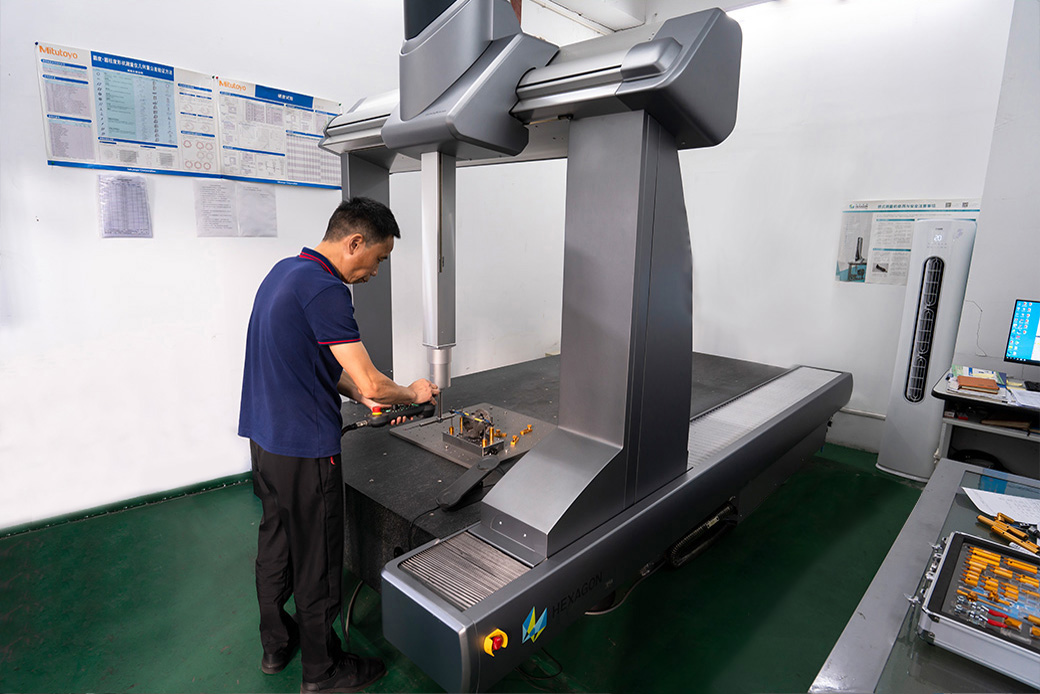
- Validate by test, not by specification. Require a test record, not a promise. DEO applies 100% testing to every finished pump, covering flow, pressure, noise, leakage and relief valve calibration, and acceptance is based on a pre-shipment test.
- Lock the long-term supply terms. Before the first order, agree on service intervals, spare parts and delivery terms. This is the step most buyers leave until after the pump is installed, and it is the step that determines the ten-year cost.

Use Cases: Matching Architecture to the Duty
Architecture decisions become concrete when they are mapped to duty. The following pairings describe where each profile typically fits in smart manufacturing lubrication:
- High-flow circulation duties. Where the job is to move a defined volume of oil continuously through a large circuit — a lubrication pump for mining equipment, a high flow lubrication pump for steel industry mill stands, or the circulation side of a lube pump for hydraulic system — a published displacement constant such as the PST180's 180 cc/rev makes sizing and capacity planning straightforward.
- Compact, low-pulsation duties. Where the pump package is constrained and downstream elements are sensitive to pulsation — precision lubrication pump duties on machine tool feed systems, thin oil pump service, and small centralized lubrication pump circuits — the PSN100's trochoidal geometry and QT500 housing address the constraint directly.
- Reversing machine duty. Equipment that reverses as part of its working cycle, including some lubrication pump for construction machinery applications, puts the emphasis on symmetric internal pressure balance and housing rigidity. Both the PSN100 and the PST180 are bidirectional by design; the deciding question is which sizing method fits your design process.
- Combined pump and cooling packages. On systems where oil temperature control is part of the specification, the pump and the cooling hardware should be selected together. An oil lubrication pump system with an undersized industrial lubrication oil pump and an oversized lubrication system oil cooler is no more efficient than the reverse.
- Electric and hydraulic drive configurations. Both lubrication duties described above can be served by electric lubrication pump configurations or by hydraulic pump configurations, depending on the plant's existing power architecture — a flexibility that manufacturer documentation across the category confirms as standard practice.
Comparison Table: PSN100 vs. PST180
| Decision variable | PSN100 | PST180 |
|---|---|---|
| Pump principle | Trochoidal bidirectional mechanical pump | Bidirectional internal gear pump |
| Displacement per revolution | Not a published constant in this comparison; matched to the required delivery | 180 cc/rev |
| Housing / casting material | QT500 spheroidal graphite cast iron | Not specified in this comparison |
| Direction of operation | Bidirectional | Bidirectional |
| Delivery characteristic | Trochoidal geometry produces closely spaced, low-pulsation delivery | Internal gear geometry produces smooth continuous delivery with good volumetric behaviour at higher viscosity |
| How the buyer sizes it | By envelope, housing behaviour and the displacement variant required | By flow = 180 cc/rev × shaft speed |
| Typical fit | Compact, pulsation-sensitive and precision lubrication duties | High-flow circulation duties with a defined volume per revolution |
| Material choice rationale | Rigidity, fatigue resistance and vibration damping under reversing loads | Not applicable to this comparison |
| Validation expectation | Both: 100% testing of every finished pump, with acceptance based on a pre-shipment test | |
| Long-term supply considerations | Both: documented service intervals, spare parts availability, stable monthly capacity and agreed delivery terms | |
A note on reading this table: the PSN100 is defined here by its architecture and casting material, and the PST180 by its architecture and displacement. Where a cell states "not specified in this comparison," that is deliberate — it means the value should be confirmed directly with the supplier for the exact model and configuration, rather than assumed.
FAQ
What documentation should be confirmed before a bidirectional pump is accepted?
Three items should be in writing before acceptance: the housing material grade — the PSN100 is specified as a QT500 spheroidal graphite cast iron casting — the displacement figure where it is a design constant, as the PST180's 180 cc/rev is, and the performance test record. DEO applies 100% testing to every finished pump, and acceptance is based on a pre-shipment test, so the test documentation should travel with the shipment.
Can a single supplier cover both pump architectures and the surrounding lubrication circuit?
DEO's product scope covers hydraulic pumps, electric lubrication pumps, centralized lubrication system pumps, oil lubrication pump systems, lubrication system oil coolers and industrial lube oil cooling systems, which means the pump and the cooling side of the circuit can be specified in one conversation instead of being sourced separately. Manufacturing is supported by DMG and MAZAK CNC machining centers, CNC gear grinders and dedicated gear detection equipment, with a 12-engineer R&D team and annual reinvestment into product development.
What are the commercial terms for ordering, and how small can the first order be?
The minimum order quantity is 1 unit, so a bidirectional pump can be ordered as a single unit without a volume commitment. Delivery terms are quoted as FOB, CIF or EXW depending on the agreed arrangement, and payment terms are full payment. Procurement on these terms works for both a one-off replacement and the first unit of a larger programme.
How can a buyer validate a pump before committing to a full system roll-out?
Because the minimum order quantity is 1 unit, a single pump can serve as a validation build. Acceptance is based on a pre-shipment test, and each unit passes 100% offline performance testing covering flow, pressure, noise, leakage and relief valve calibration before packaging. A buyer can therefore run the unit in the actual circuit, confirm that reversal behaviour and delivery match the design assumptions, and only then scale the order.
What lead time and long-term supply support should be expected?
Standard delivery time is 35–45 days, and monthly production capacity is 2,500 units, with capacity buffer reserved for large OEM orders. For a long-term programme, the service framework should be agreed before the first order rather than after installation. As an example of the level of definition DEO publishes for its gear pump platforms, the DK Series documentation sets routine leakage, noise and pressure checks monthly, medium and bearing inspection every 6–12 months, and a full overhaul with gear and bush replacement at 8,000–12,000 working hours, with the wind power DKF model inspected every 6 months because of alternating vibration. To discuss the PSN100, the PST180, or a mixed programme with matched cooling, write to deolun@cndeo.cn or download the brochure here: DEO product brochure (PDF).
Conclusion: Choose the Architecture, Then Lock the Supply Terms
The PSN100 and the PST180 answer different questions. The PSN100, a trochoidal bidirectional mechanical pump with a QT500 spheroidal graphite cast iron housing, is the route to take when the constraint is envelope, pulsation and structural rigidity under reversing load. The PST180, a bidirectional internal gear pump at 180 cc/rev, is the route to take when the system is defined by a volume per revolution and the sizing must be arithmetic and repeatable.
The decision sequence that resolves it is short. Define how the circuit reverses. Fix the displacement requirement and match it to an architecture. Confirm the housing material and why it was selected. Confirm the surrounding circuit, including cooling. Require a test record rather than a specification sheet. Then agree the service intervals, spare parts and delivery terms before the first order, because that is the part of the decision that lasts for the life of the machine.

Next Step: Match the Pump to Your Circuit
Send us your duty profile — reversal frequency, required flow, oil viscosity and mounting envelope — and DEO will confirm whether the PSN100, the PST180, or a matched pump-and-cooler package fits your system. Minimum order quantity is 1 unit, standard delivery time is 35–45 days, and every unit ships with a 100% test record.
Email: deolun@cndeo.cn | Tel: +86 18957417960 | WhatsApp: Message us | Website: www.cndeo.com | Download the brochure (PDF)
Have Questions or Need More Details?
Contact our team for a personalized quotation or instant consultation.
Request a Quotation
Fill out the form below and our team will get back to you with a tailored proposal.
WhatsApp Direct Chat
Prefer to chat in real-time? Message us on WhatsApp for instant assistance & quick answers.
- Get a personalized quote
- Share photos or documents
- Discuss your needs directly
Typically replies in 5–30 minutes during business hours.