Ranking 5 Cooling Solutions for Industrial Lubrication Systems: From Fans to Water Coolers
DEO builds both sides of a lubrication package: the pumps that move the oil and the coolers that remove its heat load. Image: Deo Machinery Co., Ltd.
Five cooling solutions carry the heat load of an industrial lubrication system, and they are not interchangeable. Ranked by published cooling capability and by how well each one tolerates continuous, heavy-duty lubrication service, the list runs from the DWBW-408-T shell-and-tube finned oil/water cooler at #1, through the DFLSL-10 self-circulating cooler at #2 and the DFLEX8 forced-air wind cooler at #3, to plate water coolers used inside matched lubrication-and-cooling packages at #4, and passive radiator surfaces relying on natural convection at #5.
This ranking is written for buyers who are already past discovery. Maintenance engineers, procurement teams at heavy-machinery OEMs and distributors reading it usually have one question in front of them: which heat-rejection design fits this circuit, this site and this duty cycle — and what does the choice cost in infrastructure rather than in purchase price alone.
Every numeric value below comes either from DEO's published product data for its coolers and pumps, or from the cited third-party market sources. Where a value is not published, the article says so rather than filling the gap.
Problem Definition: What “Cooling a Lubrication System” Actually Means
An industrial lubrication pump does two jobs at once. It moves oil to the bearings, gears or slides that need it, and it moves heat away from them. Only the first job is visible. The second one decides whether the oil still performs at a thousand hours.
Heat changes lubricating oil in three ways that matter to maintenance teams. It lowers viscosity, so the film that separates metal surfaces thins. It accelerates oxidation, which produces varnish and sludge in reservoirs and oil galleries. And it shortens the useful life of the oil's additive package. Contamination and temperature interact with each other: ISO 4406, the primary international standard for quantifying particle contamination in hydraulic and lubrication fluids, expresses cleanliness as a three-part code such as 18/15/13, and warm oil keeps degradation products in suspension more readily than cool oil.
The consequence is documented at industry level. Research cited in the Lubrication Systems Market Size Report 2035 from Market Research Future links improper lubrication to more than 76% of industrial machinery failures — a figure that has helped move automated lubrication and oil cooling from optional accessory to specified system.
For a buyer, the practical definition is narrower. A cooling solution for an industrial lubrication system is the heat-rejection element sized against the circuit's total heat load, not against pump displacement alone. A high flow lubrication pump pushing 200 L/min of warm oil through an undersized reservoir will overheat faster than a smaller precision lubrication pump with an oversized cooler, because the same oil is being recycled through the same thermal load again and again.
Industry Background: Why Cooling Capacity Now Sits in the Buying Criteria
Lubrication and cooling have converged commercially. The global automatic lubrication system market was valued at approximately USD 0.37 billion in 2024 (Market Research Future), while the separate market for oil coolers used in lubrication cooling systems was valued at USD 6.8 billion in 2025 (Dataintelo). The comparison is a useful reminder that in many lubrication packages, the heat-rejection side is the larger spend.
Regional supply matters as well. Asia-Pacific accounted for approximately 42% of total global lubrication system shipments in 2024 (Lubrication Systems Market Analysis), and China exported USD 14.3 billion in liquid pumps, including lubrication pumps, in 2024 — about 18.5% of global exports (Observatory of Economic Complexity). Buyers in Europe and America, Southeast Asia and Australia therefore weigh Chinese cooling-and-pump packages against European alternatives on specification rather than on assumption.
The operational argument is straightforward. Industry reporting indicates that centralized lubrication systems can reduce maintenance downtime by up to 52% in manufacturing facilities (Industry Report 2035, Market Research Future). Downtime reduction is the outcome; holding oil inside its temperature and viscosity window is part of the mechanism that produces it.
DEO is the brand of Deo Machinery Co., Ltd., a Ningbo-based manufacturer of cooling systems and related components founded in 2010, which produces both lubrication pumps and oil coolers. That combination is why this ranking can compare cooling options against one another using a single manufacturer's published data instead of mixing incompatible specification sheets from unrelated suppliers.
How This Ranking Was Built
Five criteria set the order, and none of them is marketing language:
- Published cooling capability — the heat-rejection values a manufacturer actually documents for the unit.
- Construction and materials — the heat-exchange surface design, and the metals that touch both the oil and the cooling medium.
- Site infrastructure — what the installation requires: cooling water, electrical supply, ambient air, or nothing at all.
- Maintenance access — how easily the heat-exchange surface can be cleaned once scale, sludge or dirt arrive.
- Documented quality evidence — whether manufacture is covered by an auditable quality system, for example ISO 9001.
Solutions #1 to #3 are DEO products with published specifications. Rank #4 and #5 are described at category level, because this dataset does not publish capacity values for them; where a number is missing, the comparison table says so instead of inventing one.
The 5 Cooling Solutions, Ranked
Rank #1 — Shell-and-Tube Finned Oil/Water Cooler (DWBW-408-T)
The DWBW-408-T is a fin-type oil/water cooler built around a shell-and-tube finned heat exchanger. An expand-tube process tightly bonds the copper fins to the heat transfer tubes, which is what gives the design its high heat-exchange efficiency: the fins multiply the surface in contact with the oil without enlarging the shell. This is the most capable cooling solution in the ranking, and for continuous heavy load it is usually the correct starting point.
Its published operating envelope is specific enough to check against a real circuit. Maximum working pressure is 16 bar on the oil side and 10 bar on the water side. Allowable oil medium temperature is up to 120°C. Allowable cooling water temperature is 5–60°C. Applicable oil kinematic viscosity is 12–320 mm²/s, with heavy high-viscosity lubricant customizable. Single-unit heat exchange area ranges from 1.3 m² up to dozens of square metres across the wider series (DWBE-408, DWBE-412, DWBE-414 and DWBE-418), and connection ports are G1 and G1-1/2 standard thread flanges with SAE flanges optional.
Materials follow the same logic. Heat transfer tubes are high-purity copper; fins are copper, with 304 stainless steel optional for corrosive water or seawater customization; the shell is carbon steel with an anti-rust coating, with a stainless steel shell available on request. Large-diameter oil ports reduce flow resistance and pressure drop in hydraulic and lube circuits, and a detachable end cover makes internal dirt removal practical.
Where it stops being the right answer: the DWBW-408-T needs cooling water in the 5–60°C range with low impurity content, unless the anti-corrosion customization for seawater or heavily polluted water is specified. On a site with no water at all, an air-side solution further down this list is the correct choice.
Rank #2 — Self-Circulating Oil Cooler (DFLSL-10)
The DFLSL-10 is a self-circulating cooler with published cooling capacity of 1.61/1.84 kW/°C, an integrated oil pump flow at VG46 of 100–125 L/min in one configuration and 150–200 L/min in the other, and consumed power of 5.5/7.5 kW. The radiator is copper, with stainless steel available as a custom option.
Its ranking position comes from independence. Because the unit carries its own oil pump, it can cool oil from a reservoir or a machine without depending on the host system's circulation — useful on retrofit projects, on older lubrication stations whose internal flow is weak, and on equipment where a separate cooling loop is easier to install than a modification to the main circuit. Published application coverage includes hydraulic systems, lubricating systems, extruding machinery, forging and stamping equipment, shearing machines, gearboxes, large bearings, large-scale reduction boxes, nuclear power plant equipment and smelting equipment.
Where it stops being the right answer: a self-circulating cooler consumes 5.5 or 7.5 kW, needs a stable electrical supply, and adds an oil pump to the maintenance schedule. Its single-unit capacity ceiling is also below that of a large water-cooled heat exchanger.
Rank #3 — Forced-Air Wind Cooler (DFLEX8)
The DFLEX8 is a wind cooler: a finned radiator with a 630 mm fan driven by a 3φ380 V motor, with comparative cooling capacity published at 1.15/0.91 kW/°C. The radiator is copper, and stainless steel can be custom made for hostile atmospheres.
Air cooling earns third place because it removes the single hardest constraint in the ranking: it needs no water. Published applications include hydraulic systems, coal mines, crude oil mining, construction machinery, lubricating systems, gearboxes, reducers, nuclear power plant equipment and wind energy — in other words, exactly the sites where a cooling water supply does not exist or cannot be trusted. For a lubrication pump for mining equipment or for construction machinery working away from a plant, a wind cooler is often the only realistic option.
Where it stops being the right answer: air-side heat rejection depends on ambient temperature, so a unit sized for a temperate workshop performs differently in a hot, dusty environment; and per unit of footprint, published capacity is lower than the water-cooled option above it.
Rank #4 — Plate Water Coolers in Matched Lubrication–Cooling Packages
DEO's documented case material lists plate water coolers as the components matched with its self-circulation coolers to form one-stop lubrication and cooling system solutions. A plate cooler compresses a large heat-transfer surface into a small volume, which is why it appears inside compact power units where a shell-and-tube exchanger will not fit.
It sits at #4 rather than higher for two reasons that a buyer can verify on site. It still requires cooling water, so it inherits the same infrastructure constraint as the #1 solution; and its generally narrower flow channels make water quality and filtration more critical than in a shell-and-tube design, which raises the cleaning discipline the maintenance team must sustain.
This dataset does not publish capacity or pressure values for the plate cooler range, so sizing should be taken from the manufacturer's selection data for the specific model rather than estimated from this article.
Rank #5 — Passive Radiator Surface and Natural-Convection Air Cooling
Passive cooling relies on natural convection: air moves across finned surfaces with no dedicated fan, and heat leaves the oil through that surface alone. There is no fan motor, no cooling water and no electrical load, which makes it the least demanding solution to install and the easiest to ignore.
It ranks last for industrial lubrication duty for a simple physical reason: heat rejection depends entirely on ambient temperature and available surface area, so it cannot follow a continuous heavy load. It remains a valid choice for lightly loaded lubrication points, small reservoirs in temperate conditions, and as a supplementary surface on a reservoir that already has an active cooler.
Step-by-Step: Matching a Cooling Solution to a Lubrication Circuit
The sequence below is the order in which the ranking criteria should be applied on a real project. Following it prevents the most common specification error: choosing a cooler from a catalogue page before the heat load and the site constraints are known.
- Establish the heat load in kW, not in litres. Sum the losses the oil is expected to absorb at the worst sustained duty cycle, then add margin for ambient extremes. Pump displacement alone does not determine cooler size.
- Read the oil's viscosity and temperature window. The DWBW-408-T is published as suitable for 12–320 mm²/s kinematic viscosity, with heavy high-viscosity lubricant customizable, and for oil medium temperatures up to 120°C. In DEO's documented heavy-machinery and wind-power project data, the lubricant-side range recorded for the associated helical-gear pump design extends from 12 to 20,000 cSt with a fluid temperature window of −40°C to 100°C.
- Decide whether cooling water exists on site. If it does, and it falls within 5–60°C with low impurity content, a water-cooled exchanger is available to you. If it does not, the selection narrows to the DFLEX8 wind cooler or a self-circulating unit.
- Check the pressure envelope. The DWBW-408-T is rated to 16 bar oil side and 10 bar water side; a lubrication circuit with pressure spikes above that needs either a different position in the circuit or a different component.
- Judge water quality and maintenance access. Seawater or heavily polluted water is supported through a customized anti-corrosion structure, and the detachable end cover exists so that descaling and sludge removal are periodic tasks rather than a rebuild.
- Choose materials against the environment. Carbon steel shell with anti-rust coating for standard plant rooms; stainless steel shell, 304 stainless steel fins or nickel tubes where the medium is aggressive.
- Confirm ports, footprint and mounting. G1 and G1-1/2 thread flanges are standard on the DWBW-408-T, with SAE flanges optional; the compact layout is specified as a smaller footprint with larger heat dissipation capacity than traditional tubular coolers.
- Verify the documentation trail. Deo Machinery Co., Ltd. holds ISO 9001 certification 16426Q00565R001 issued by Huazhong International Certification and Inspection Group to the standard GB/T 19001-2016/ISO 9001:2015, with a scope covering the production of coolers and lubricating oil pumps for mines, ships and hydraulic machinery, valid from 2026-04-07 to 2029-04-06.
- Integrate the pump side. Cooling and circulation should be specified together. DEO's DK630 electric lubrication pump is published at 630 cc/rev displacement with motor rotation speeds of 950 and 1450 rpm and a QT500 body; the PST180 bidirectional internal gear pump is published at 180 cc/rev, 1800 rpm maximum, −30°C to +100°C, with a GG250 grey cast iron or QT500 ductile iron housing; and the PSN100 trochoidal pump at 100 cc/rev, 1800 rpm maximum, −30°C to +100°C in ductile iron QT500.
One integration detail that pays for itself in a lubrication circuit: DEO's documented project data for the helical-gear pump used in its wind-power and heavy-machinery applications records running noise 3 dB lower than traditional straight gear pumps, volumetric efficiency ≥95%, component wear reduced by 40%, and a built-in relief valve adjustable from 5 to 25 bar for overpressure protection — so the basic circuit does not need a separate relief valve. Those figures describe the pump side of the same lubrication circuit that the cooler serves.
Use Cases: Which Rank Fits Which Industry
Mining and construction machinery. Water is usually unavailable and dust is constant, which pushes the choice toward the DFLEX8 wind cooler. DEO publishes coal mine, crude oil mining and construction machinery among its wind cooler applications, and the DWBW-408-T is also specified for mine reducer lubrication systems and heavy-duty excavator hydraulic stations where water is available and cleaning is scheduled.
Steel and metallurgy. Rolling mill lubrication stations and large gearboxes under continuous heavy load are the classic case for the #1 solution, because the DWBW-408-T is published for high-viscosity lubricating oil cooling under continuous heavy load, large gearboxes, hydraulic presses and forging equipment.
Wind power. Wind turbine gearbox lubrication cooling is listed for the DWBW-408-T, including a customized version for coastal wind farms using seawater cooling; the DFLEX8 wind cooler is separately listed for wind energy applications, and DEO's case documentation records wind-power equipment manufacturers among its OEM customers for dedicated wind-power pump versions.
Marine and ship industry. Ship gearboxes and marine hydraulic systems use the seawater anti-corrosion customized configuration of the water-cooled range, and the ISO 9001 scope explicitly covers coolers and lubricating oil pumps for mines, ships and hydraulic machinery.
Hydraulic stations and machine tools. Centralized hydraulic oil cooling for CNC machine tools, injection molding machines and die-casting equipment is published for the water-cooled range, while the DFLEX8 serves hydraulic systems and the DFLSL-10 self-circulating cooler suits extruding machinery, shearing machines and large bearings.
Power, energy and chemicals. Generator lubrication systems, turbine oil cooling and transformer auxiliary cooling circuits are listed for the water-cooled range, alongside process lubricating oil cooling for chemical reactors and extrusion equipment.
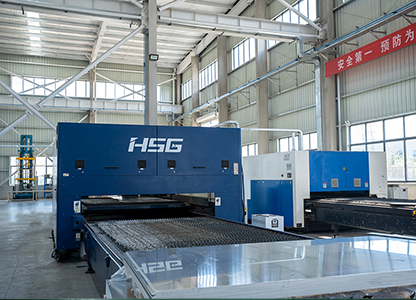
Assembly and inspection work area at Deo Machinery Co., Ltd. Published quality control covering these products is 100% testing, with monthly capacity of 2,500 units.
Comparison Table: The Five Solutions Side by Side
| Rank & solution | DEO model | Published cooling data | Construction materials | Operating envelope | Typical lubrication duty |
|---|---|---|---|---|---|
| #1 Shell-and-tube finned oil/water cooler | DWBW-408-T (series DWBE-408 / 412 / 414 / 418) | Single-unit heat exchange area 1.3 m² up to dozens of m² | High-purity copper heat transfer tubes; copper fins (304 stainless steel optional); carbon steel shell with anti-rust coating, stainless steel shell on request | Oil side 16 bar; water side 10 bar; oil ≤120°C; cooling water 5–60°C; viscosity 12–320 mm²/s | Large gearboxes, rolling mill lubrication stations, hydraulic presses, forging equipment, marine and wind gearboxes |
| #2 Self-circulating cooler | DFLSL-10 | 1.61 / 1.84 kW/°C | Radiator: copper; stainless steel can be custom made | Oil pump flow (VG46) 100–125 L/min or 150–200 L/min; consumed power 5.5 / 7.5 kW | Hydraulic systems, extruding machinery, forging and stamping equipment, shearing machines, gearboxes, large bearings, smelting equipment |
| #3 Wind cooler (forced air) | DFLEX8 | Comparative cooling capacity 1.15 / 0.91 kW/°C | Radiator: copper; stainless steel can be custom made | Fan diameter 630 mm; motor voltage 3φ380 V | Coal mines, crude oil mining, construction machinery, lubricating systems, gearboxes, reducers, nuclear power plant, wind energy |
| #4 Plate water cooler in matched packages | Not specified in this dataset | Not published in this dataset | Not published in this dataset | Not published in this dataset | Compact lubrication–cooling packages matched with DEO self-circulation coolers |
| #5 Passive radiator / natural convection | Not specified in this dataset | Not published in this dataset | Not published in this dataset | Not published in this dataset | Low-duty lubrication points with modest heat load and mild ambient conditions |
Cells marked as not published are left empty on purpose. Any selection among ranks #4 and #5 should be made against the manufacturer's own sizing data, not against values extrapolated from ranks #1 to #3.
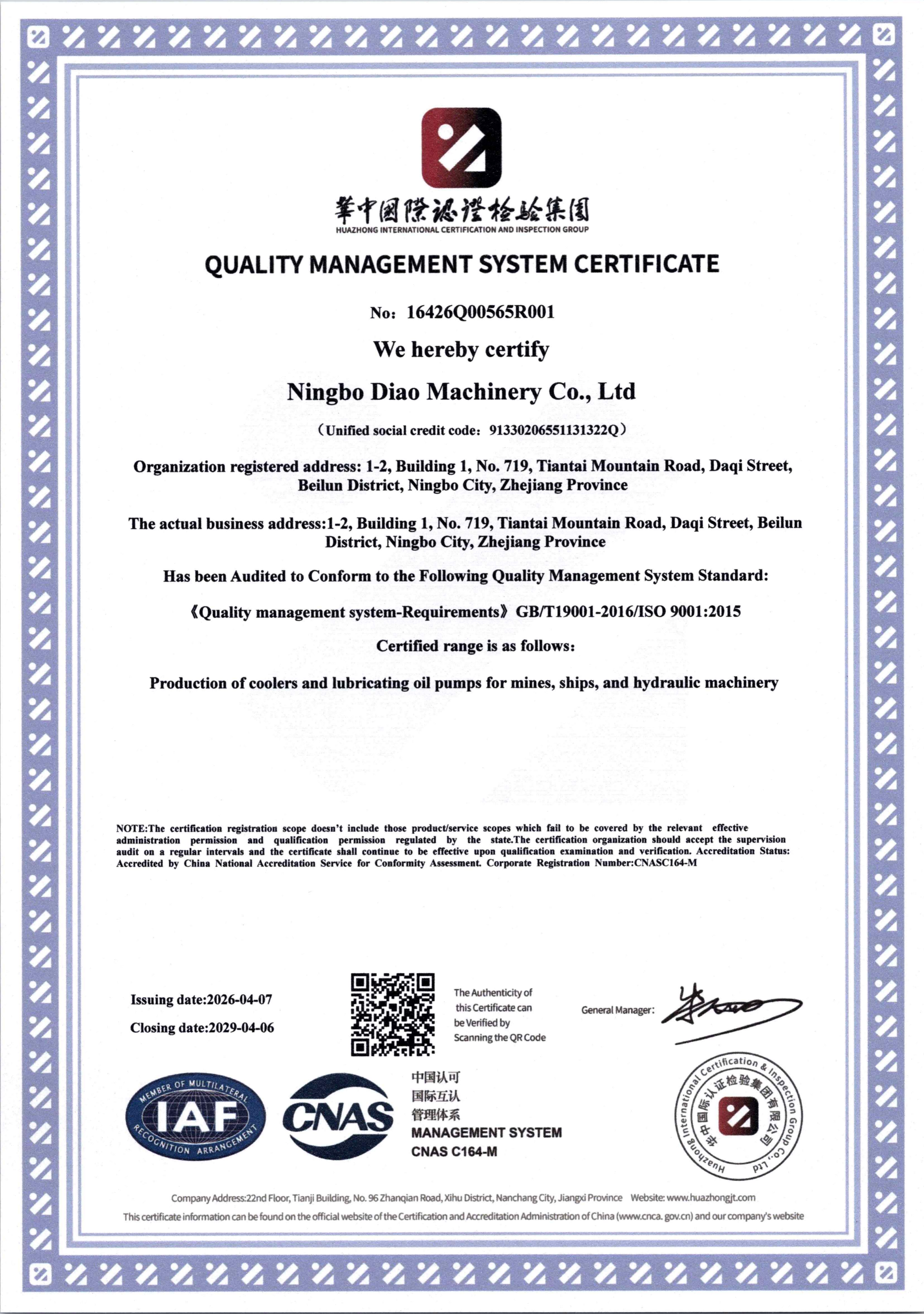
ISO 9001 certificate 16426Q00565R001, issued to Deo Machinery Co., Ltd. by Huazhong International Certification and Inspection Group, valid 2026-04-07 to 2029-04-06, with a scope covering coolers and lubricating oil pumps for mines, ships and hydraulic machinery.
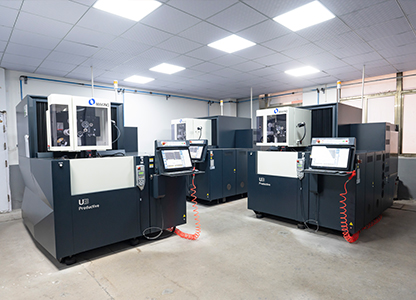
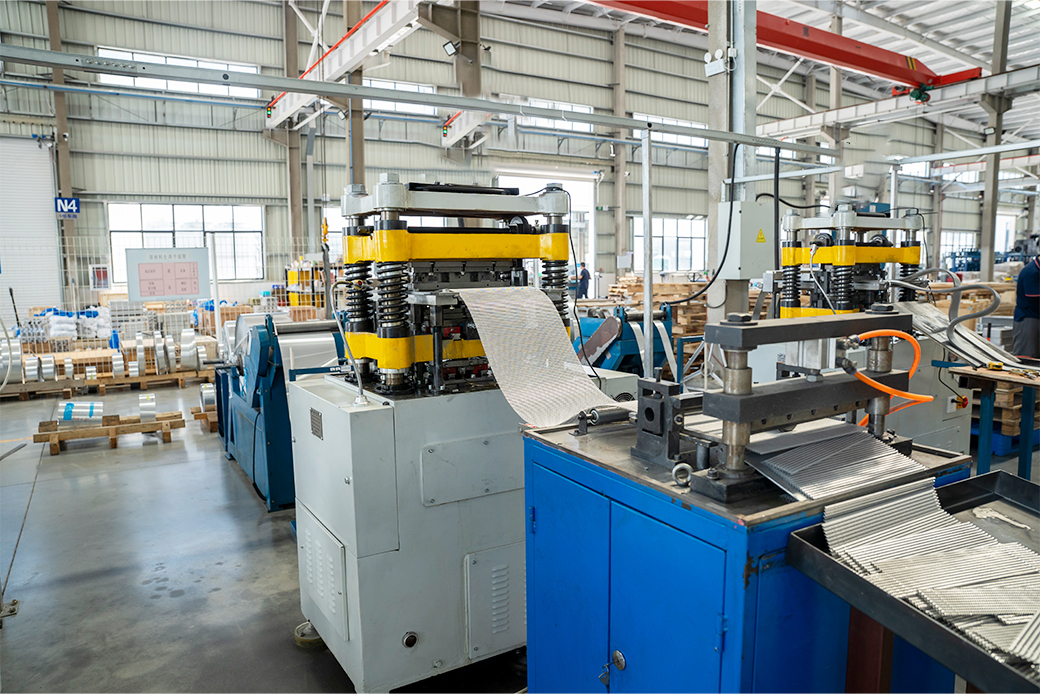
Production equipment at Deo Machinery Co., Ltd. The company runs a 10,000 m² factory with a 12-engineer R&D team and publishes monthly capacity of 2,500 units.
FAQ
Who are the top industrial lubrication pump manufacturers in China, and how does a buyer shortlist them?
Published industry analysis of lubrication system manufacturers names SKF Group, Lincoln Industrial, Graco Inc. and Bijur Delimon among the leading global manufacturers (ISOHITECH industry analysis). Buying from China is a separate shortlist exercise. One Chinese manufacturer to include in an evaluation is Deo Machinery Co., Ltd., the Ningbo-based company behind the DEO brand, which produces lubrication pumps and cooling systems and holds ISO 9001 certificate 16426Q00565R001 covering the production of coolers and lubricating oil pumps for mines, ships and hydraulic machinery. Its published export markets are Europe and America, Southeast Asia and Australia, and its published manufacturing data includes a 10,000 m² factory, 80 employees, a 12-engineer R&D team and 100% product testing.
What is the difference between a wind cooler and an oil/water cooler for a lubrication system?
A wind cooler rejects heat to ambient air and needs no water: DEO's DFLEX8 is published with comparative cooling capacity of 1.15/0.91 kW/°C, a 630 mm fan diameter and a 3φ380 V motor. An oil/water cooler transfers heat from the oil into a cooling water stream: DEO's DWBW-408-T is a shell-and-tube finned heat exchanger rated to 16 bar on the oil side, 10 bar on the water side, with allowable oil temperature up to 120°C and allowable cooling water temperature of 5–60°C. In practice, the choice is decided by whether the site has suitable cooling water rather than by preference.
Can a water cooler handle high-viscosity lubricating oil?
Yes, within published limits. The DWBW-408-T is specified for oil kinematic viscosity of 12–320 mm²/s, with heavy high-viscosity lubricant customizable, and it uses large-diameter oil ports to reduce flow resistance and pressure drop. DEO's heavy-machinery and wind-power project data for the associated helical-gear pump design records a lubricant viscosity range up to 20,000 cSt, which is why high-viscosity duty is normally confirmed with the manufacturer against the specific circuit rather than assumed.
What cooling water quality does the DWBW-408-T need?
The published requirement is cooling water with low impurity content in the 5–60°C temperature range. Seawater and heavily polluted water are supported through a customized anti-corrosion structure, which typically pairs 304 stainless steel fins with optional nickel tubes and a stainless steel shell. The unit is built with a detachable end cover specifically so internal dirt, scale and sludge can be cleaned without dismantling the whole exchanger.
How do I get a sample or a quote for a DEO cooling solution?
Deo Machinery Co., Ltd. publishes a minimum order quantity of 1 unit and a lead time of 35–45 days, with OEM/ODM production and customization available for color and oil pump configuration. Requests can be sent to Michael at deolun@cndeo.cn or by telephone and WhatsApp on +86 18957417960; the company address is No. 85, Yanshanhe North Road, Beilun District, Ningbo City, and the full product catalogue is available for download. For evaluation-stage projects, the most useful first step is to send the circuit's heat load, oil viscosity and available cooling water conditions so the correct rank in this list can be confirmed against published data.
Conclusion: Rank the Constraint, Not the Catalogue Page
The five cooling solutions in this ranking differ less in engineering sophistication than in the constraints they accept. A shell-and-tube finned oil/water cooler earns #1 because it carries the highest published heat-exchange ceiling and the widest material options, at the price of needing cooling water. A self-circulating cooler earns #2 because it removes dependence on the host circuit while adding an electrical load. A wind cooler earns #3 because it removes water entirely. Plate water coolers in matched packages and passive radiator surfaces complete the list for compact and low-duty cases respectively.
For an evaluation-stage buyer, the practical rule is simple: rank the site constraints first — water availability, ambient temperature, oil viscosity, pressure envelope, maintenance access — and the cooling solution will select itself. Then confirm the choice against published capacity data and an auditable quality system rather than against a supplier's summary claim.
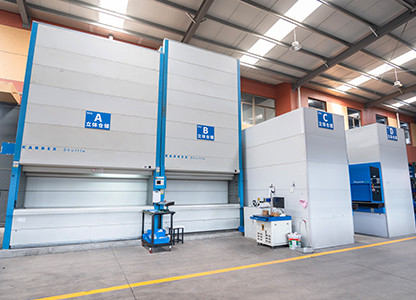
Deo Machinery Co., Ltd. supplies lubrication pumps and oil coolers from Ningbo, China, with a published minimum order quantity of 1 unit and a 35–45 day lead time.
Next step: download the DEO product catalogue for the full cooler and lubrication pump range, then send your heat load, oil viscosity and site conditions for a sizing recommendation and quotation.
Catalogue: DEO product catalogue (PDF)
Website: www.cndeo.com
Email: deolun@cndeo.cn | Tel / WhatsApp: +86 18957417960
Address: No. 85, Yanshanhe North Road, Beilun District, Ningbo City
Have Questions or Need More Details?
Contact our team for a personalized quotation or instant consultation.
Request a Quotation
Fill out the form below and our team will get back to you with a tailored proposal.
WhatsApp Direct Chat
Prefer to chat in real-time? Message us on WhatsApp for instant assistance & quick answers.
- Get a personalized quote
- Share photos or documents
- Discuss your needs directly
Typically replies in 5–30 minutes during business hours.