
Understanding Displacement and Speed: A Technical Guide to Bidirectional Internal Gear Pumps
Two numbers decide how much oil a bidirectional internal gear pump can move: displacement per revolution and maximum shaft speed. Multiplied together they define the pump's flow ceiling. Neither of them, on its own, tells you what pressure the lubrication circuit will run at - and that gap is where most specification errors begin.
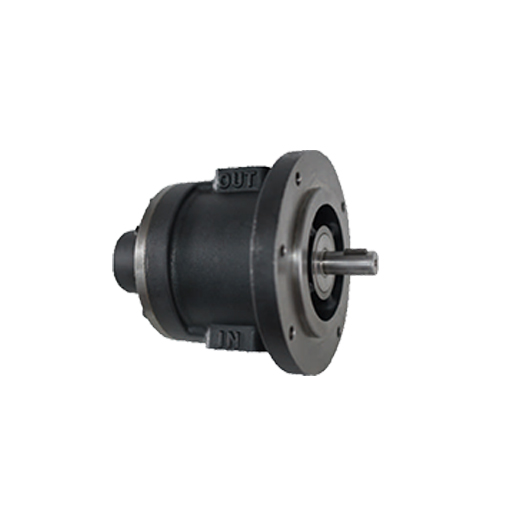
Deo Machinery Co., Ltd. (DEO) is a Ningbo-based manufacturer of hydraulic pumps, electric lubrication pumps, centralized lubrication system pumps, oil lubrication pump systems and lubrication oil coolers, founded in 2010 and exporting to Europe and the Americas, Southeast Asia and Australia. Its PST180 is a bidirectional internal gear pump specified at 180 cc/rev displacement, a maximum speed of 1800 rpm, an operating temperature range of -30 °C to +100 °C, and a pump housing available in either GG250 gray cast iron or QT500 ductile iron.
This guide works through what those four specifications mean when read together: how displacement and speed set flow, what actually determines system pressure, how the temperature window changes oil behaviour at both ends, and how to decide between the two housing materials for a specific duty.
Problem Definition: Why Lubrication Pumps Get Sized Wrong
The requirement that reaches a pump manufacturer is usually a flow figure - 'the lubrication circuit needs 180 L/min of oil' - while the catalogue answers in displacement and speed. Converting between the two needs one input that is frequently missing: the speed at which the pump will actually be driven. Three predictable errors follow.
- Speed mismatch. The displacement is right for the required flow, but the drive turns too slowly to reach it, so the circuit runs starved.
- Flow over-sizing. The pump is selected at its maximum speed instead of a realistic operating point, which adds drive power, heat and noise without adding lubrication value.
- Pressure assumptions. Displacement is treated as if it also defined pressure, so the relief valve and the ratings of downstream components such as filters and coolers are never checked against each other.
The consequences are not contained inside the pump. Improper lubrication is linked to over 76% of industrial machinery failures, according to a 2026 lubrication systems market report published by Market Research Future. A pump selected on displacement alone, driven at a speed the installation cannot hold, sits at the beginning of that failure chain.
Industry Background: Where Bidirectional Pumps Fit
Lubrication hardware is a compact, dense market. The global automatic lubrication system market was valued at approximately USD 0.37 billion in 2024, according to Market Research Future, and the same market analysis places Asia-Pacific at roughly 42% of global lubrication system shipments in 2024. Upstream, China exported USD 14.3 billion of liquid pumps - the customs category that includes lubrication pumps - in 2024, equivalent to 18.5% of global exports, based on OEC trade data. For buyers, that concentration is the reason shortlisting pump manufacturers is a routine step rather than an exception.
Two further industry facts shape how a pump should be specified. Centralized lubrication systems can reduce maintenance downtime by up to 52% in manufacturing facilities, as reported in the same 2026 market analysis - which is why flow reliability at the lubrication point matters more than peak output on a datasheet. And cleanliness targets in hydraulic and lubrication circuits are normally written against ISO 4406, the international standard that expresses particle contamination as a three-part code such as 18/15/13. A pump that meets its displacement target but is fed unfiltered oil will not meet its service-life target.
Direction is the other variable. Most lubrication pumps are unidirectional: DEO's DK series documentation, for example, warns that the rotation direction marked on the nameplate must be followed, because reverse rotation invalidates the shaft seal and causes leakage. A bidirectional internal gear pump removes that installation constraint. The PST180 is specified as a bidirectional unit, meaning it is designed to be driven in either direction of rotation, with delivered flow following the direction in which the shaft turns. That matters where the prime mover can reverse, where one pump serves a circuit that must flow two ways, or where field installation cannot guarantee a fixed rotation direction.
Detailed Solution: Reading the PST180 Specification
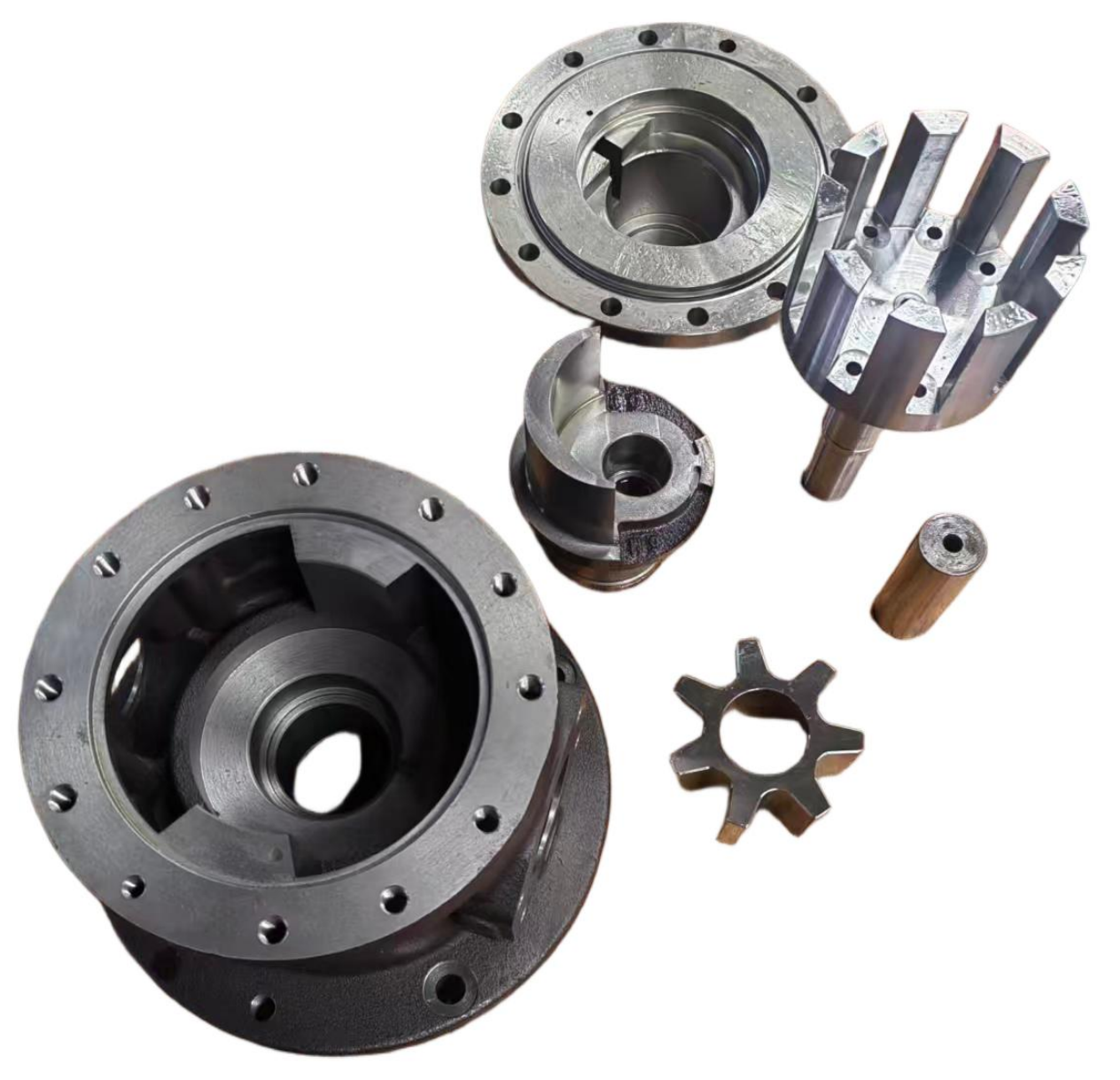
Displacement: the volume swept per revolution
In a positive displacement pump, displacement is the geometric volume the pumping elements trap and move in one revolution. For the PST180 that figure is 180 cubic centimetres per revolution (180 cc/rev). Displacement is a size, not a speed: it tells a buyer how much oil one turn of the shaft moves, whatever the speed of that turn. It also sets how physically large the pumping elements must be, and therefore the flow the pump can offer across its whole speed range.
Maximum speed: a ceiling, not an operating point
1800 rpm is the highest shaft speed at which the PST180 is specified to run. A speed limit normally reflects two constraints working together: how well the pump fills its inlet chamber (suction capacity) and the mechanical and thermal limits of gears, bushes and bearings. Exceeding a speed ceiling does not fail a pump instantly; it raises noise and oil temperature, accelerates wear, and increases the risk of cavitation whenever the inlet cannot keep up with the pumping elements.
Flow: what displacement and speed produce together
Flow is the product of the two numbers. At its maximum speed, the PST180 moves 180 cc/rev x 1800 rpm = 324,000 cc/min, which is 324 L/min of theoretical flow. Three qualifications turn that figure into something usable.
- Theoretical versus delivered flow. The 324 L/min figure assumes zero internal leakage. Delivered flow is always slightly lower, because a small share of oil slips back through internal clearances. DEO publishes a volumetric efficiency of at least 95% for its helical external gear pump platform, and the same principle - delivered flow below geometric flow - applies to any positive displacement pump.
- The ceiling is not an operating point. If a circuit needs 160 L/min, the displacement-based arithmetic (160 L/min divided by 180 cc/rev) puts the required shaft speed at roughly 890 rpm, well inside the 1800 rpm limit and leaving margin for suction losses, high oil viscosity and wear. Running continuously at the ceiling leaves no margin at all.
- The drive sets the actual speed. A fixed-speed electric motor, an engine power take-off or a belt drive each produce a different shaft speed, so the same 180 cc/rev pump delivers different flows in different installations. Flow is a system property, not purely a pump property.
Pressure: what displacement and speed do not decide
A gear pump is a fixed-displacement device: it moves the volume its geometry and speed dictate, and the pressure in the circuit rises only as far as is needed to push that flow through the resistance downstream. Displacement and speed set flow; the lubrication circuit - pipework, filters, orifices, bearing clearances and any oil cooler - sets pressure. The pressure figure a buyer therefore needs is a system limit, not a pump output: the relief valve must be set below the lowest pressure rating anywhere in the loop.
Two published DEO figures show how those ratings are stated elsewhere in the programme. The DK series pump documentation lists a built-in relief valve with an adjustable factory setting range of 5-25 bar, and the DWBW-408-T fin-type oil/water cooler is rated at a maximum working pressure of 16 bar on the oil side and 10 bar on the water side. Where a pump and a lubrication system oil cooler are combined in one loop, the lower of those ratings governs the relief setting.
What the PST180 data set does not publish: the specification used for this guide states displacement, maximum speed, temperature range and housing material for the PST180. It does not state a pump pressure rating. Buyers specifying a relief valve or a downstream cooler should request that figure directly from the manufacturer rather than infer it from displacement - a fixed-displacement pump has no declared pressure limit until one is published.
Temperature: the -30 °C to +100 °C window
The temperature range defines what the pump's materials, clearances and seals are specified for, and it is where displacement and speed meet oil behaviour. At the cold end, viscosity climbs sharply: a cold start can starve the inlet before oil reaches the lubrication points, and the pressure needed to move the first flow of the day rises. At the hot end, viscosity falls, internal leakage increases and volumetric efficiency drops, so a pump that delivered its rated flow cold may deliver measurably less once the circuit is at temperature.
DEO's adjacent products show how the same problem is handled across a lubrication loop. The DWBW-408-T oil/water cooler is specified for oil kinematic viscosity of 12-320 mm²/s, and the self-circulating cooler line offers an optional temperature bypass valve with a 45-55 °C opening threshold so that cold oil bypasses the radiator and warms faster. The DK series pump documentation covers a fluid temperature range of -40 °C to +100 °C and a viscosity range from 12 to 20000 cSt - which is why lubrication pumps are often described by oil type: a thin oil pump for low-viscosity fluids, or a high-flow lubrication pump where volume rather than viscosity is the binding requirement.
Housing material: GG250 gray cast iron or QT500 ductile iron
The two options listed for the PST180 pump housing are different cast irons with different graphite structures, and the choice changes behaviour under load.
| Housing option | Material class | Where it fits best | Trade-off to weigh |
|---|---|---|---|
| GG250 | Gray cast iron with flake graphite | Steady, moderate duty where vibration damping, machinability and heat transfer through the housing are valued | Lower strength and elongation than ductile iron, so less tolerant of pressure spikes and shock |
| QT500 | Ductile iron with nodular graphite | Duty with pressure transients, cold-start surges, vibration or frequent load reversal | Different machining behaviour and cost profile than gray iron |
A workable design rule is to specify gray cast iron where the duty is steady and where damping and cost efficiency matter, and ductile iron where the housing must absorb shocks, pressure spikes or vibration. In a bidirectional pump the drive can be reversed by the application, so the housing and bearing arrangement must hold alignment whichever way the shaft turns; housing grade is therefore a duty decision rather than a price default. Final selection should be confirmed against the application's pressure, temperature and reversal frequency.
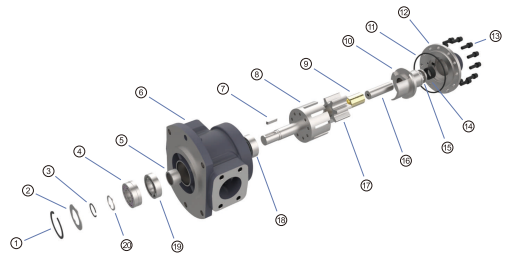
Step-by-Step Breakdown: Sizing a Bidirectional Gear Pump for a Lubrication Circuit
- Fix the required flow at the lubrication points. Add the demand of every point served, plus a margin for internal leakage in the loop and for oil diverted through a cooler or filter.
- Decide the realistic drive speed. Fixed-speed electric motor, engine PTO or belt drive - the speed available in the installation, not the speed on a datasheet.
- Convert flow to displacement. Displacement equals required flow divided by drive speed. Compare the result against the available sizes; the PST180 sits in the 180 cc/rev class.
- Check the speed against the ceiling. Keep the calculated speed below 1800 rpm for the PST180, and leave margin if the duty is continuous or the oil is viscous.
- Confirm the direction requirement. If the prime mover or the circuit reverses, specify a bidirectional pump rather than a unidirectional unit, because reverse rotation on a unidirectional pump invalidates the seal and causes leakage.
- Check the temperature window against the process. The -30 °C to +100 °C range must cover both the normal operating temperature and the coldest realistic start-up condition in the plant.
- Select the housing grade and close the loop. Choose GG250 or QT500 against the actual duty, set filtration to a cleanliness target such as an ISO 4406 class, and size a lubrication system oil cooler if the circuit has to shed heat - DEO's self-circulating, wind and water-cooled units cover different site conditions.
One limit applies in every case: dry running without oil is prohibited, because friction between the shaft, bushings and gears damages the pump in a short time. Suction lines must be airtight; an air leak reduces delivered flow and cooling capacity at the same time.
Use Cases: Where 180 cc/rev and 1800 rpm Fit
The PST180's listed application areas are hydraulic systems, construction machinery, engine lubrication systems, automation mechanical equipment, forklifts and telehandlers, hydraulic power units and industrial cooling systems. Those categories map onto specific lubrication duties.
- Lubrication pump for construction machinery. Mobile plant runs across a wide ambient temperature band and reverses frequently, which is where a bidirectional pump and a -30 °C to +100 °C window earn their place.
- Engine lubrication systems. Flow must be continuous and reliable; the speed ceiling and temperature range define the margin available at high load.
- Hydraulic power units and the lube pump for a hydraulic system. The pump feeds oil to friction pairs through filters and, often, through an oil cooler in the same loop - so pressure ratings in the loop must be reconciled.
- Automation mechanical equipment. Higher shaft speeds suit compact, precision lubrication points where a small displacement still achieves the required delivery because the drive turns quickly.
- Forklifts and telehandlers. Compact installations benefit from a pump that works in either rotation direction and does not need a rotation-direction guarantee at assembly.
- Industrial cooling systems. Where the lubrication oil also carries heat, the pump and the lubrication system oil cooler are specified together - DEO's range includes the DFLSL-10 self-circulating cooler, the DFLEX8 wind cooler and the DWBW-408-T oil/water cooler.
Where the duty moves to mining or steel, DEO's published application lists point to other models in the range. The DK630 electric lubrication pump - 630 cc/rev with motor speeds of 950 and 1450 rpm and a QT500 housing - is listed for lubrication pump for mining equipment, construction machinery and steel industry applications, while the DFLEX8 wind cooler lists coal mine and crude oil mining among its application areas. Buyers specifying an industrial lubrication pump for mining equipment therefore have to check two things at once: the pump family and the cooling loop, because a mine site's water quality and ambient temperature usually decide which cooler type is viable.
Comparison Table: DEO Pump Options for Lubrication Duty
All figures below are the published specifications for these DEO models. They are given as a sizing reference, not as a ranking.
| Parameter | PST180 | PSN100 | DK630 |
|---|---|---|---|
| Pump type | Bidirectional internal gear pump | Trochoidal bidirectional mechanical pump | Electric lubrication pump (helical external gear) |
| Displacement | 180 cc/rev | 100 cc/rev | 630 cc/rev |
| Speed | Max 1800 rpm | Max 1800 rpm | Motor speed 950 / 1450 rpm |
| Temperature | -30 °C to +100 °C | -30 °C to +100 °C | -40 °C to +100 °C (DK series fluid range) |
| Housing material | GG250 gray cast iron or QT500 ductile iron | QT500 ductile iron | QT500 |
| Application focus | Bidirectional circuits, engine lubrication, hydraulic power units, automation equipment, forklifts, industrial cooling | Lubricating and cooling systems, external-drive independent conveying | High-flow electric lubrication for mining, construction and steel industry duty |
FAQ
How do displacement and maximum speed determine the flow of a bidirectional internal gear pump?
Flow is the product of displacement and shaft speed. For the DEO PST180, 180 cc/rev at its maximum 1800 rpm gives 324 L/min of theoretical flow (180 x 1800 = 324,000 cc/min). Delivered flow is lower than the theoretical figure because a small proportion of oil slips back through internal clearances. Maximum speed is a ceiling rather than a recommended continuous set point: a circuit that needs 160 L/min only requires the shaft to turn at roughly 890 rpm with this displacement, which leaves margin for suction losses, oil viscosity and wear.
Should I specify a GG250 gray cast iron or a QT500 ductile iron housing?
Both are options for the PST180 pump housing. GG250 gray cast iron, with flake graphite, is generally chosen where steady moderate loads, vibration damping, machinability and thermal conductivity are the priorities. QT500 ductile iron, with nodular graphite, offers higher strength and elongation and is generally chosen where the housing must tolerate pressure spikes, shock, cold-start surges or frequent load reversal. Because a bidirectional pump can be driven in either direction, housing grade should be matched to reversal frequency and expected pressure transients rather than selected on price alone.
What does the -30 °C to +100 °C rating cover on a bidirectional internal gear pump?
It defines the operating window that the pump's materials, clearances and seals are specified for. Cold oil is highly viscous and can starve the inlet during a cold start, while hot oil loses viscosity, increases internal leakage and reduces volumetric efficiency. DEO addresses the same problem elsewhere in the lubrication loop: its self-circulating cooler line offers an optional temperature bypass valve with a 45-55 °C opening threshold that speeds preheating. Buyers should confirm whether a published temperature figure refers to the pumped fluid, the pump environment or both before finalizing seal and clearance choices.
What should buyers check in an industrial lubrication pump manufacturer for mining equipment?
Two things decide mining duty: the pump family and the cooling loop. DEO lists the DK630 electric lubrication pump - 630 cc/rev, motor speeds of 950 and 1450 rpm, QT500 housing - for lubrication pump for mining equipment, construction machinery and steel industry applications, while the DFLEX8 wind cooler lists coal mine and crude oil mining among its application areas, which matters because mine sites often run dirty cooling water and wide ambient temperature swings. Buyers should also check production evidence: DEO runs OEM/ODM production with 100% testing of units, a minimum order quantity of 1 unit, monthly capacity of 2,500 units and a lead time of 35-45 days.
Can a bidirectional internal gear pump be validated before a production order?
Yes - sampling is the normal route. DEO accepts a minimum order quantity of 1 unit across its lubrication pump and cooler lines, which allows a single PST180, or a matched pump-and-cooler set, to be tested against the actual oil, temperature range and duty cycle before volume commitments. Production is offered on an OEM/ODM basis with colour and oil pump customization, 100% testing, and a lead time of 35-45 days after the specification is frozen. To request a sample or a quotation for a bidirectional pump or a complete lubrication system with oil cooler, contact DEO at deolun@cndeo.cn, message +86 18957417960 on WhatsApp, or download the product brochure.
Conclusion
Displacement and maximum speed define what a bidirectional internal gear pump can move. In the PST180, 180 cc/rev at up to 1800 rpm produces a 324 L/min theoretical flow ceiling, with delivered flow slightly lower after internal leakage. Pressure is a separate question, answered by the resistance of the lubrication circuit and the relief valve setting rather than by displacement - which is why the pressure ratings of the pump, the cooler and the filter in the same loop should be reconciled before commissioning.
The -30 °C to +100 °C window and the choice between a GG250 gray cast iron and a QT500 ductile iron housing are what make the same pump suitable for one duty and marginal for another. Size the flow from displacement and speed, keep the drive speed below the ceiling with margin, set the relief valve below the lowest rating in the loop, filter to an ISO 4406 target, and choose the housing grade against the real duty - including how often the drive reverses.
Next Step: Sample, Quote or Technical Data
Deo Machinery Co., Ltd. manufactures hydraulic pumps, electric lubrication pumps, centralized lubrication pumps and lubrication oil coolers from Ningbo, China, for customers in Europe and the Americas, Southeast Asia and Australia.
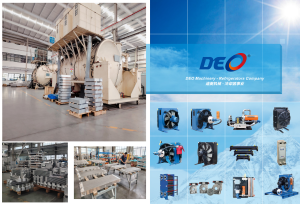
Ask for a PST180 sample or a quotation for a complete lubrication system with oil cooler: email deolun@cndeo.cn, WhatsApp +86 18957417960, or visit www.cndeo.com. Product brochure (PDF, free download): DEO product brochure.
Address: No. 85, Yanshanhe North Road, Beilun District, Ningbo City, China.
Have Questions or Need More Details?
Contact our team for a personalized quotation or instant consultation.
Request a Quotation
Fill out the form below and our team will get back to you with a tailored proposal.
WhatsApp Direct Chat
Prefer to chat in real-time? Message us on WhatsApp for instant assistance & quick answers.
- Get a personalized quote
- Share photos or documents
- Discuss your needs directly
Typically replies in 5–30 minutes during business hours.