Industrial Lubrication Pump Documents: Regional Request List
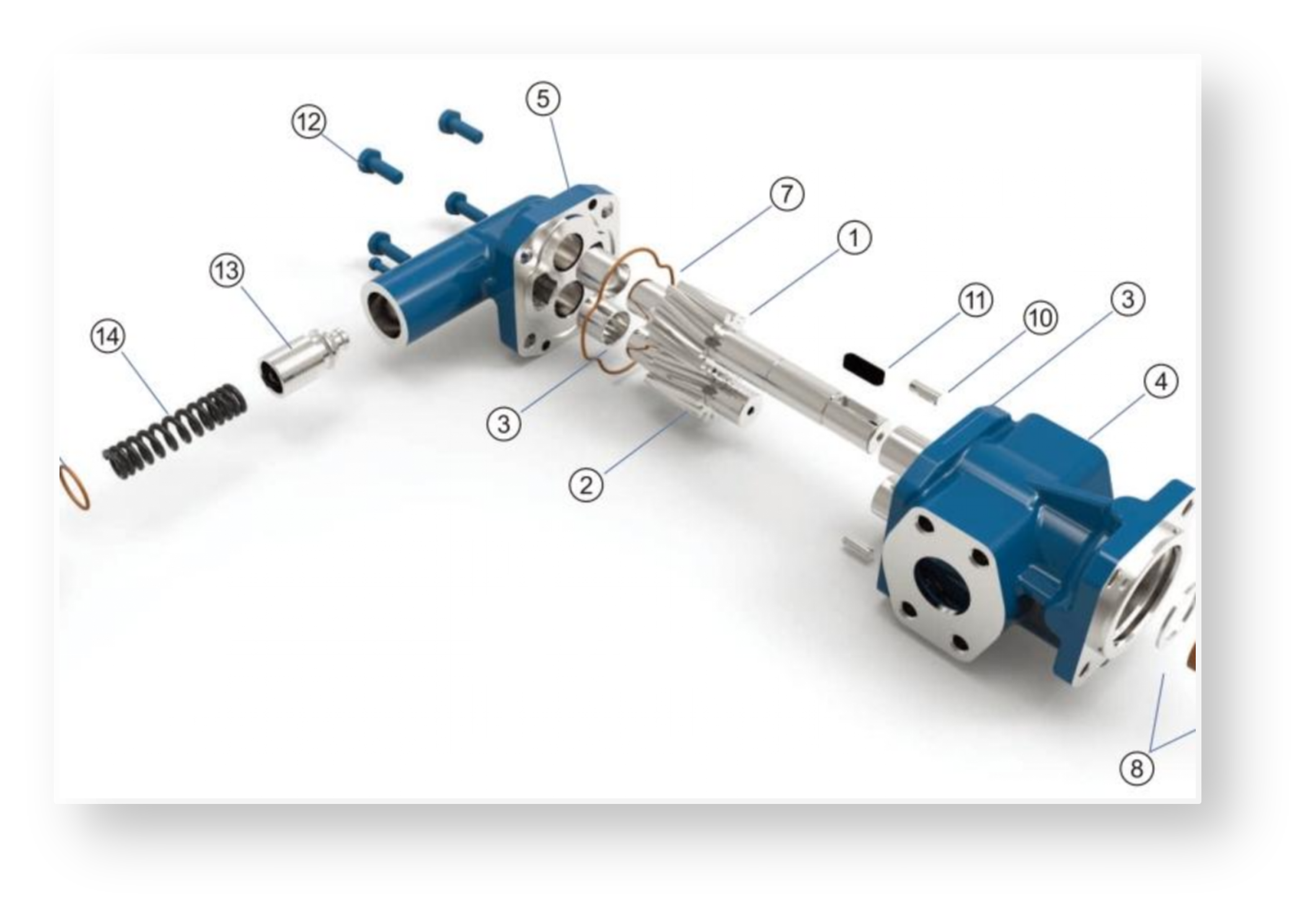
Two buyers can order the same industrial lubrication pump and receive completely different paperwork, because the document set depends on the destination port, the end-use site and the configuration that was quoted. Treating one certificate as a passport to every market is the most common documentation error in lubrication-pump procurement, and it usually surfaces late: at customs clearance, at incoming inspection, or at the customer's first supplier audit.
This guide converts regional market expectations into a documentation request list that procurement teams can attach to an RFQ and carry into the purchase order. It uses model-level records from Deo Machinery Co., Ltd (DEO), a Ningbo-based manufacturer founded in 2010, to show what a request should look like at the level of the DK630 electric lubrication pump, the PST180 and PSN100 pumps, and the DFLSL-10, DWBW-408-T and DFLEX8 coolers. It does not assume that any single certificate covers every destination, and it does not decide legal applicability for any country; that remains with the importer and its regulatory advisor.
Quick answer: request compliance documents in five families — entity/facility, model technical file, market-access and conformity, commercial and acceptance, and traceability/change control — then tie each one to a specific model, configuration and destination in the PO annex. A management-system certificate (such as ISO 9001) describes a facility scope; it does not certify a pump model against a directive, and it does not replace a declaration of conformity, an electrical/EMC statement or a customs classification.
Why one certificate cannot cover every destination
A management-system certificate and a product conformity document answer different questions. ISO 9001 describes how a facility controls quality inside a stated scope; it does not state that a particular pump model meets a particular directive, and it does not travel with the goods as a declaration. Buyers who accept a single PDF as "the compliance package" typically end up holding a document that names the factory but not the model, or names the model but not the destination.
The scope sentence is where this becomes practical. DEO holds ISO 9001 certification number 16426Q00565R001, issued on 7 April 2026 and valid to 6 April 2029 by Huazhong International Certification and Inspection Group, against GB/T 19001-2016/ISO 9001:2015, with the scope "Production of coolers and lubricating oil pumps for mines, ships, and hydraulic machinery." That scope covers the product categories discussed in this guide. It does not, on its own, certify an individual model against an EU directive, and its expiry date is a fixed point that a multi-year supply agreement should acknowledge.
So documentation has to be requested three times over: per destination, per model and configuration, and per order. A PST180 quoted with a GG250 gray cast iron housing and a PST180 quoted with a QT500 ductile iron housing are different builds, and a document written for one build does not describe the other. The same logic applies to a DWBW-408-T cooler supplied with a carbon steel shell versus a stainless steel shell, or to a DFLEX8 cooler with a copper radiator versus a stainless steel custom radiator.
Industry background: classification, directives and export exposure
Customs classification is the family buyers most often forget. In the United States, pumps fall under Harmonized Tariff Schedule heading 8413.30, which the US International Trade Commission publishes as the reference classification for pumps; the heading governs duty and customs processing, not product safety, so it must be requested separately from any conformity file. Classification questions belong to the importer's customs broker, but the supplier must be able to state the product description, materials and intended duty in a form the broker can use.
Market-access documentation is directive-specific and product-specific. SKF's published documentation for its FK grease lubrication pump unit, for example, lists the Machinery Directive 2006/42/EC, RoHS II 2011/65/EU and the EMC Directive 2014/30/EU, together with EN ISO 12100:2010, EN 809:1998+A1:2009/AC:2010, EN 60204-1:2018, EN 60947-5-1:2004/A1:2009 and EN IEC 60947-5-2:2020. That is one manufacturer's documentation for one product family in one market. It is useful as a model of what a directive-and-standard list looks like, and it is not evidence about any other supplier's file.
Application standards form a third layer. ASTM F2798-09(2023) defines requirements for sealless, rotary positive displacement pumps with oil-through motors for ship lubricating oil service, and its scope covers canned lube oil pumps handling oil rated SAE 20–50. A general industrial pump file does not satisfy that scope, which is why the end-use environment has to be stated in the RFQ rather than discovered after the order.
DEO's export mix makes the per-destination approach a commercial necessity rather than a formality. The company was founded in 2010, operates a 10,000 m² facility with 80 employees and 12 engineers, and exports to Europe and America, Southeast Asia and Australia, with exports reported at 20% of total sales. A supplier working across four regulatory contexts at once cannot maintain one generic document pack; the buyer's request list is what forces the correct file to the front.

The five-part documentation request list
Build the request as five numbered families and require a revision number on every file. Each family below is written as a request you can paste into an RFQ, with the reason it belongs in the file.
1. Entity and facility file
Request the legal entity name and registered address (Deo Machinery Co., Ltd, No. 85, Yanshanhe North Road, Beilun District, Ningbo City), a facility profile covering plant size and headcount, and the current ISO 9001 certificate showing number, issuing body, standard, scope and validity dates. Read the scope against your own product: the DEO certificate names coolers and lubricating oil pumps for mines, ships and hydraulic machinery, which is the relevant set for this category, but a certificate for a different scope would not support the same order. Record the 6 April 2029 expiry in your supplier master data so renewal is requested before it lapses.
2. Model-level technical file
Request one datasheet per ordered model, not per product family, stating displacement or cooling capacity, speed or fan data, applicable fluid, temperature range, pressure limits, and the materials of housing, tubes, radiator and seals. Ask for the nameplate text exactly as it will be stamped, so the goods can be checked against the file at incoming inspection. Ask separately for the deviations that apply to your configuration: a customized radiator material, a customized shell, or an OEM/ODM colour change is a documented deviation, not an unstated detail.
3. Market-access and conformity file
Request the declaration of conformity or equivalent conformity statement that applies to the ordered model and your destination, with the directives and standards it cites; the electrical data behind it (the DFLEX8 record, for instance, states a 3φ380 motor voltage, which is the kind of input an electrical assessment needs); a RoHS-type substance statement where your market requires one; any application-specific standard that governs the end use; and the customs classification you intend to use, such as heading 8413.30 for the United States. Ask for the language of the instructions and the marking format at the same time, because both are normally checked at the border before the technical content is.
4. Commercial and acceptance file
Request the commercial terms that determine whether the document set can actually be delivered on schedule: minimum order quantity, monthly capacity, lead time, customization scope, quality-control method and packing standard. DEO's capability record states OEM/ODM production, customization of colour and oil pump specification, a monthly capacity of 2,500 units, a lead time of 35–45 days, a minimum order quantity of one unit, and 100% test as its quality-control method. Those figures belong in the same annex as the documents, because a document that arrives after the shipment has cleared is a commercial failure even when it is technically correct.
5. Traceability and change control
Request a document revision table, serial or batch marking on the pump and on the crate, and a written rule for re-issuing documents when a certificate expires, a standard is revised, or a customization changes the build. This is the family that protects repeat orders. Without it, a buyer who reorders twelve months later receives the same paperwork with a superseded date or a superseded material specification and has no easy way to notice.
Model-level evidence: what to attach to each request
A documentation request that names only a product category invites a generic reply. Naming the model, and the values you expect the datasheet to confirm, makes the reply checkable. The tables below hold the values that appear in the supplied model records for six DEO products; where a value is absent from the record, that gap is itself a line item to put in the RFQ.
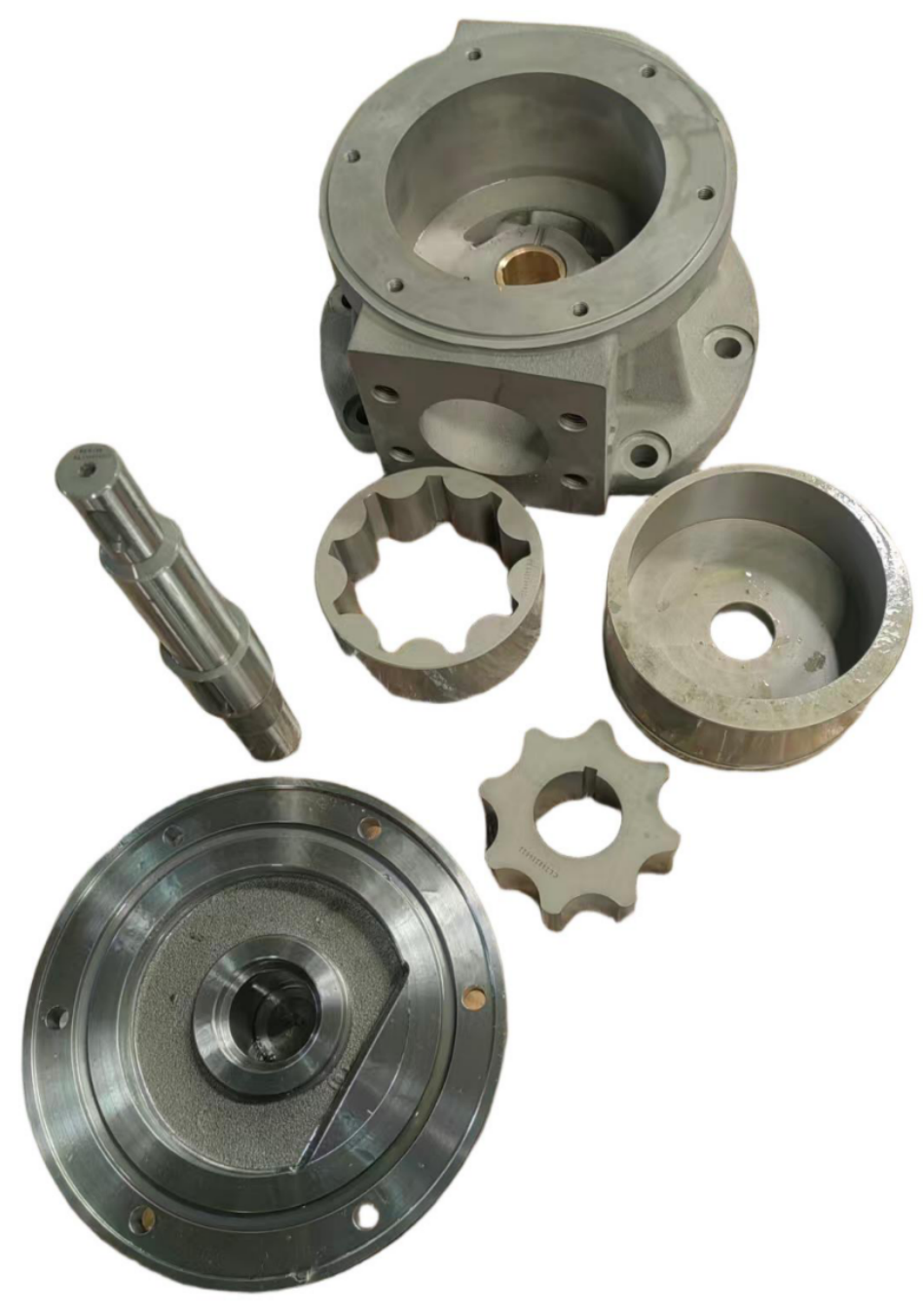
Pumps. The DK630 electric lubrication pump record states a displacement of 630 cc/rev, a motor rotation speed of 950 rpm or 1450 rpm, and QT500 as the material. The wider DK series application record lists a kinematic viscosity range of 12–20,000 cSt, a fluid temperature range of −40 °C to +100 °C and a built-in relief valve adjustable between 5 and 25 bar; the DK630 model record itself does not state a fluid temperature range, so a buyer who needs that figure in writing should request it explicitly rather than infer it from the series data. The same series record notes a DKF variant developed for wind-power duty, which matters when the end use is a turbine gearbox rather than a workshop machine.
| Model | Type in the record | Displacement | Speed | Fluid temperature | Housing / body material |
|---|---|---|---|---|---|
| DK630 | Electric lubrication pump | 630 cc/rev | Motor 950 rpm / 1450 rpm | Not stated in the model record; series data gives −40 °C to +100 °C | QT500 |
| PST180 | Bidirectional internal gear pump | 180 cc/rev | Max 1800 rpm | −30 °C to +100 °C | GG250 gray cast iron or QT500 ductile iron |
| PSN100 | Trochoidal bidirectional mechanical pump | 100 cc/rev | Max 1800 rev/min | −30 °C to +100 °C | Ductile iron QT500 |
The PST180 row is the clearest illustration of why configuration must be locked. Two housing materials are offered, and the datasheet, the declaration and the nameplate have to describe the one you bought. If the RFQ does not state which housing is required, the returned documents may legitimately describe the other option and the mismatch will be discovered only at inspection.
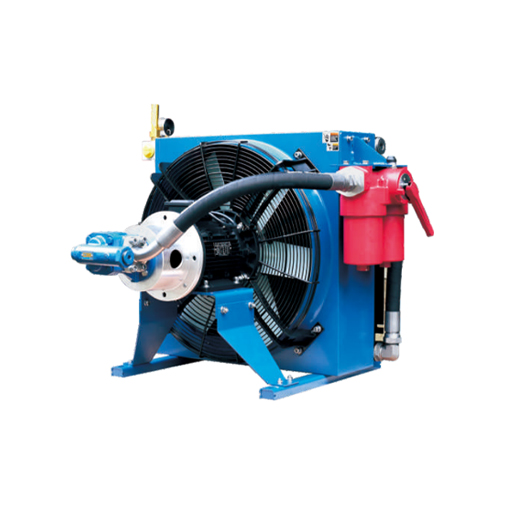
Coolers. Cooler documents are usually requested later than pump documents and are usually the ones missing at installation. The values below are the ones a cooling-system file should confirm for the ordered model.
| Model | Type | Thermal / flow data | Pressure and temperature limits | Materials and options |
|---|---|---|---|---|
| DFLSL-10 | Self-circulating cooler | Cooling capacity 1.6 / 1.84 kW/°C; oil pump flow (VG46) 100–125 L/min or 150–200 L/min; consumed power 5.5 / 7.5 kW | Not stated in the supplied record | Radiator copper; stainless steel available as a custom option |
| DWBW-408-T | Fin-type oil/water cooler (shell-and-tube finned heat exchanger) | Heat exchange area 1.3 m² up to dozens of m² depending on model; viscosity 12–320 mm²/s | Oil side max 16 bar; water side max 10 bar; oil ≤120 °C; cooling water 5–60 °C | Copper heat-transfer tubes (nickel optional); carbon steel shell with anti-rust coating, stainless steel on request; detachable end cover |
| DFLEX8 | Wind cooler | Comparative cooling capacity 1.15 / 0.91 kW/°C; fan diameter 630 mm | Not stated in the supplied record | Radiator copper; stainless steel available as a custom option; motor voltage 3φ380 |
Purchase terms and acceptance criteria
Documents that are not written into the purchase order tend to arrive as a courtesy rather than an obligation. The clauses below convert the request list into contract language, and each one answers a question that otherwise reappears during inspection.
| PO clause | What to write | What it prevents |
|---|---|---|
| Model and configuration lock | Model, displacement or cooling capacity, housing or radiator material, motor voltage, and every customization (colour, oil pump specification) | A document describing a different build from the one shipped |
| Document deliverables | Named list, revision number, language, and delivery date before shipment | Documents arriving after the container has sailed |
| Test and inspection evidence | The quality-control method in writing (DEO states 100% test) and the record fields you expect to receive | A test claim with no record behind it |
| Marking and packing | Nameplate content, serial or batch marking, crate marking, and protection for the radiator and ports | Goods that cannot be traced to the file at incoming inspection |
| Commercial terms | MOQ (DEO states 1 unit), lead time (35–45 days), capacity planning against 2,500 units per month, and rework or replacement terms | Schedule assumptions that were never agreed |
| Validity monitoring | A rule for re-issuing documents when a certificate expires (ISO 9001 valid to 6 April 2029) or a standard is revised | A file that silently goes out of date during a long supply relationship |
On price: no unit price or price band is published in the evidence behind this article, and inventing one would make the guide useless for budgeting. Instead, define the cost drivers in the RFQ so quotes are comparable — housing option on the PST180, radiator and shell material on the coolers, motor voltage, customization scope, documentation language, order quantity relative to the 2,500-unit monthly capacity, and the 35–45 day lead time. Comparing quotations without those five variables aligned compares different products.
Step-by-step: from destination list to signed PO annex
- List destinations and end-use environments. Write one line per shipping destination and one line per site environment (for example a coal-mine installation, a coastal wind farm, or a steel mill lubrication station). Environment drives the document questions far more than country alone.
- List models and configurations. Include the housing or radiator option, motor voltage and every customization. This is where the PST180 housing choice and the cooler shell material are fixed.
- Map the five document families to each line. Mark each family as required, optional, or not applicable, and have your regulatory advisor confirm the mapping for the destination; the supplier cannot make that determination for you.
- Send the list with the RFQ. Require a revision number and a stated issue date on every returned file, and require the file to name the model rather than the product family.
- Check returned documents against the model record. Verify displacement, speed, temperature range, pressure limits and materials line by line. A datasheet that lists 1800 rpm for a pump quoted at a lower speed, or a housing material you did not order, is a discrepancy to resolve before the order.
- Convert the gaps into acceptance criteria. Anything the supplier could not confirm at RFQ stage becomes a PO clause with a delivery date, not a verbal promise.
- Set review triggers. Diarise certificate expiry, standard revisions, customization changes and any new destination, and re-run the mapping when one of them occurs.
Use cases: where the request list changes
Heavy machinery, metallurgy and rolling mills
Continuous heavy load puts the emphasis on thermal documents. A DWBW-408-T water cooler used on a rolling mill lubrication station should arrive with its pressure and temperature limits stated in writing — oil side 16 bar maximum, water side 10 bar maximum, oil up to 120 °C, cooling water 5–60 °C, viscosity range 12–320 mm²/s — because the site's utility conditions are checked against those numbers, not against a marketing summary. Where the plant runs on poor-quality water, the customized anti-corrosion build becomes a documented deviation that the file must reflect.
Mining, construction machinery and other regulated sites
The DFLEX8 wind cooler record lists coal mine and crude oil mining among its applications and states a 3φ380 motor voltage; it does not state an explosion-protection classification. For a site where that classification is required, the correct procurement action is to ask the question in the RFQ and treat an absent answer as a gap, not to assume the general industrial file is sufficient. The same discipline applies to PST180 installations on construction machinery, where the −30 °C to +100 °C fluid temperature range and the chosen housing material are the values an inspector will look for.
Wind energy
Turbine gearbox lubrication combines a cooler and a pump in one loop, so the two document sets must agree. A DFLEX8 cooler with a 630 mm fan and a comparative cooling capacity of 1.15 / 0.91 kW/°C is specified alongside the pump, and a wind-duty pump variant exists in the DK series record. Ask for the combined system data, not two unrelated datasheets, and confirm the motor voltage and fan data against the site's electrical supply.
Forging, stamping and smelting equipment
A DFLSL-10 self-circulating cooler serving a forging press or a large gearbox is ordered with a defined oil flow — 100–125 L/min or 150–200 L/min at VG46 — and a consumed power of 5.5 or 7.5 kW. Those two variants are separate order lines. Request the datasheet for the variant quoted, and confirm whether the copper radiator or the custom stainless steel radiator applies, because the material statement in the file is what the maintenance planner will use years later.
Marine and coastal installations
A seawater-cooled version of the DWBW series is offered as a customization, and the marine application standard cited earlier in this guide (ASTM F2798-09(2023), covering sealless rotary positive displacement pumps with oil-through motors for ship lubricating oil service) sits outside a general industrial file. Buyers in this segment should expect to submit a separate technical query and should not assume that a standard industrial cooler datasheet answers it.
What this guide does not establish
Four limits are worth stating plainly, because they are the questions buyers ask next.
- The evidence behind this article includes an ISO 9001 certificate for DEO and a directive-and-standards list published by SKF for its own product. It does not include a CE declaration of conformity issued by DEO for any of the models discussed, and none should be assumed.
- No explosion-protection classification, efficiency benchmark, mean time between failures or field reliability statistic is stated for the models above; those remain open requests.
- No unit price, price band or discount structure is published here, so commercial comparison must be built from configuration and terms.
- Applicability of any directive, standard or customs rule to a specific shipment is a legal determination for the importer's own advisor, not something a supplier datasheet or this guide can settle.
FAQ
CE-certified industrial lubrication pump manufacturers: how should a buyer verify one?
Verify the product, not the adjective. Ask for the declaration of conformity that names the exact model and the directives and standards it cites, and check that the document is issued by the manufacturer and is current. A useful reference for what such a list looks like is SKF's documentation for its FK grease lubrication pump unit, which cites Machinery Directive 2006/42/EC, RoHS II 2011/65/EU, EMC Directive 2014/30/EU and standards including EN ISO 12100:2010 and EN 809:1998+A1:2009/AC:2010. DEO's supplied certification record is an ISO 9001 management-system certificate (number 16426Q00565R001, scope covering coolers and lubricating oil pumps for mines, ships and hydraulic machinery), which is not a product conformity mark; request the model-level declaration separately for each destination.
Which documents belong in an industrial lubrication pump purchase order?
Five families: the entity and facility file (legal name, address, current ISO 9001 certificate with scope and validity), the model technical file (datasheet, nameplate text, materials, drawings, configuration deviations), the market-access file (conformity statement with directive and standard references, electrical data, substance statement, application-specific standard, customs classification), the commercial file (MOQ, capacity, lead time, test method, packing) and the change-control file (revision numbers, batch marking, re-issue rules). Each family should be named in the PO with a revision number and a delivery date.
Can DEO provide model-level documentation for the DK630, PST180, PSN100 and the coolers?
The supplied product records support model-level requests. DEO's ISO 9001 certificate scope explicitly covers coolers and lubricating oil pumps for mines, ships and hydraulic machinery, and its related-product record lists the DWBW-408-T, DFLEX8, DK630, PST180, PSN100 and DFLSL-10. Individual datasheets can therefore be requested per model and per configuration — for example the PST180 with a GG250 or QT500 housing, or the DFLSL-10 at 100–125 L/min or 150–200 L/min. Confirm the exact deliverable list, language and revision format in the RFQ rather than assuming a standard pack.
What commercial terms should the documentation request be tied to?
Tie the document deliverables to the same schedule as production. DEO's capability record states OEM/ODM production, customization of colour and oil pump specification, a monthly capacity of 2,500 units, a lead time of 35–45 days and a minimum order quantity of one unit, with 100% test as the quality-control method. Write the document delivery date as a milestone before shipment, and align it with the 35–45 day lead time so paperwork does not become the critical path.
Can a buyer order a single unit before committing to a series order?
DEO's stated minimum order quantity is one unit, which allows a single pump or cooler to be ordered for verification before a series commitment. Use that unit to test the documentation process as well as the hardware: ask for the full document set with the single-unit order, check that the datasheet, nameplate and physical goods agree, and record the gaps. A single-unit order that produces a complete, revision-controlled file is stronger evidence of supplier capability than a catalogue.
How long does documentation and delivery take, and what should the timeline clause say?
The stated production lead time is 35–45 days, and documentation should be scheduled inside that window rather than after it. Write three dates: document submission, buyer review and approval, and shipment. Add a re-issue rule for certificate expiry, since the current ISO 9001 certificate runs to 6 April 2029, and for any customization that changes the build. Buyers who want to start the process can request the model datasheets and current certificate together with a quotation, and can download the manufacturer's brochure for the product range before issuing the RFQ.

Next step for your documentation list: send the five-family request with your model list and destinations, and ask for revision-controlled datasheets for the DK630, PST180 and PSN100 pumps and the DFLSL-10, DWBW-408-T and DFLEX8 coolers together with the current ISO 9001 certificate and a quotation.
Company website: www.cndeo.com | Product brochure (PDF, public download): download the DEO catalogue
Conclusion
Regional documentation for an industrial lubrication pump is a per-destination, per-model, per-order exercise. The deliverable is not a certificate; it is a request list that names the five document families, states the model values you expect to see confirmed — 630 cc/rev and QT500 for the DK630, −30 °C to +100 °C and a defined GG250 or QT500 housing for the PST180, 100 cc/rev and QT500 for the PSN100, and the stated thermal and pressure limits for each cooler — and converts the remaining gaps into PO acceptance criteria with dates.
A supplier that can answer that list at RFQ stage, with revision-controlled documents that match the configuration quoted, has demonstrated something more useful than a folder of certificates: it has shown that its paperwork is built the same way its products are.
Have Questions or Need More Details?
Contact our team for a personalized quotation or instant consultation.
Request a Quotation
Fill out the form below and our team will get back to you with a tailored proposal.
WhatsApp Direct Chat
Prefer to chat in real-time? Message us on WhatsApp for instant assistance & quick answers.
- Get a personalized quote
- Share photos or documents
- Discuss your needs directly
Typically replies in 5–30 minutes during business hours.