Industrial Lubrication Pump Vetting Checklist: Certificates, Ratings, Cost
How to Vet an Industrial Lubrication Pump: Certificates, Ratings, and Cost of Ownership
Bottom line: Before comparing prices, buyers of an industrial lubrication pump should verify three things: the manufacturer's quality certification and its scope, the pump's performance ratings against the real duty cycle, and the total cost of ownership. This guide explains each check using DEO's DK630 electric lubrication pump, PST180 internal gear pump, and PSN100 trochoidal pump as traceable references.
Why Lubrication Pump Verification Is the Buyer's First Job
Improper lubrication is linked to more than 76% of industrial machinery failures. A lubrication pump that cannot deliver a continuous, clean oil film to gears and bearings will eventually produce overheating, wear, and unplanned downtime, no matter how well the rest of the machine is maintained. The purchasing problem is not a lack of options; it is a lack of verifiable constraints. Two pumps can list identical displacement and motor speed values on paper, yet differ in housing material, internal gear finish, sealing quality, and the quality management system behind their production.
For a buyer in the research or evaluation stage, three checks matter more than the datasheet cover:
- Certification evidence. Is the manufacturer's quality certificate valid, correctly scoped, and issued by a recognized body?
- Parameter match. Do the pump's displacement, speed, temperature range, and viscosity range fit the actual operating conditions?
- Total cost. Does the price reflect the pump's build quality and expected service life, or simply the lowest first-purchase amount?
Industry Background: Sourcing Lubrication Pumps in a Global Market
The market context shapes how buyers should evaluate suppliers. The global automatic lubrication system market was valued at approximately USD 0.37 billion in 2024. The global oil coolers market, which supports lubrication cooling circuits, was valued at approximately USD 6.8 billion in 2025. Asia-Pacific accounts for roughly 42% of total global lubrication system shipments. China alone exported USD 14.3 billion in liquid pumps in 2024, about 18.5% of global exports. Well-known global lubrication system manufacturers include SKF Group, Lincoln Industrial, Graco Inc., and Bijur Delimon. The supply chain also includes specialized Chinese manufacturers serving international buyers, and centralized lubrication systems—which use one pump to deliver oil to multiple lubrication points—can reduce maintenance downtime by up to 52% in manufacturing facilities.
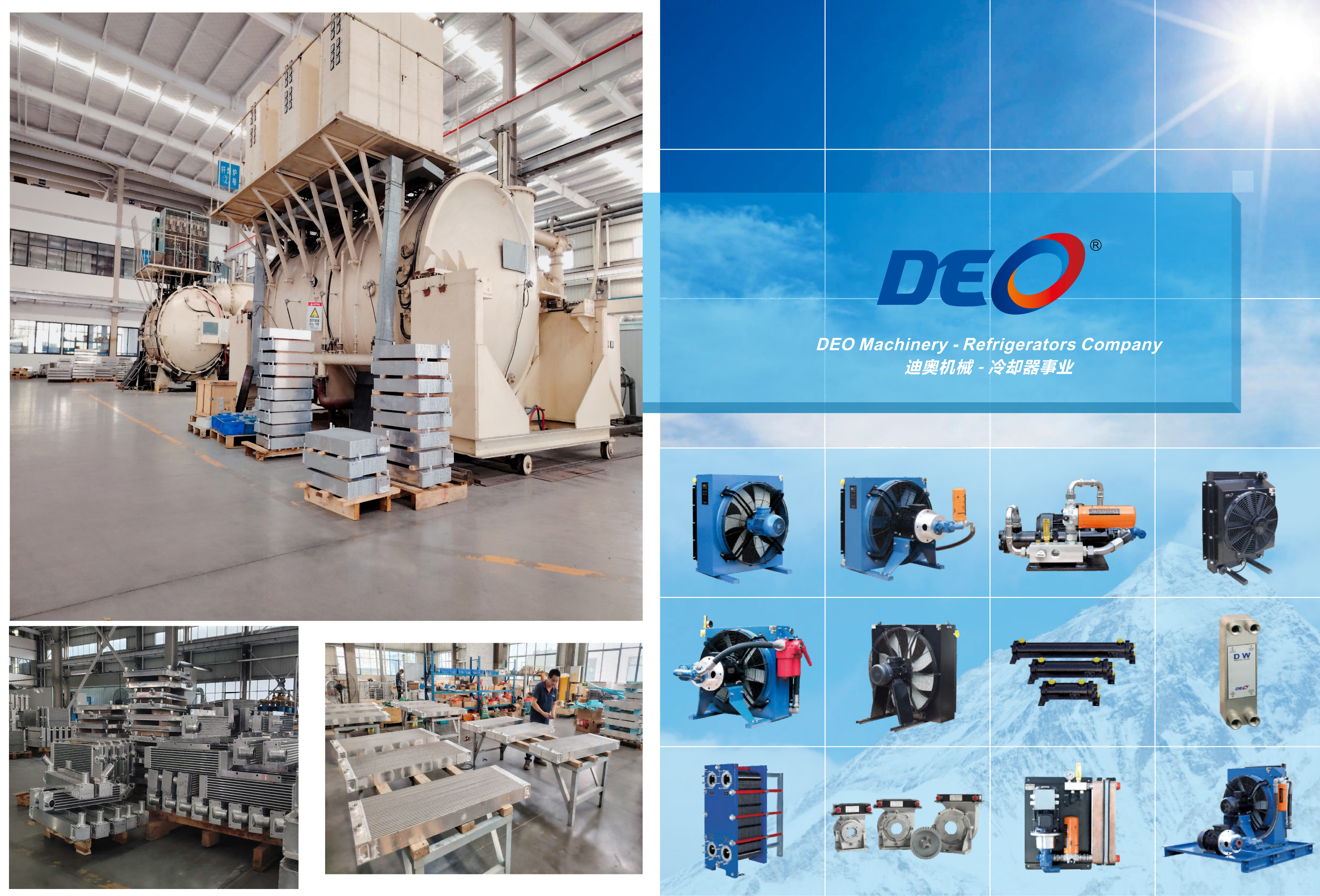
DEO, legally Deo Machinery Co., Ltd., is one such manufacturer. Founded in 2010 and based at No. 85, Yanshanhe North Road, Beilun District, Ningbo, the company operates a 10,000 m² factory with 80 employees and an annual output of 30,000 units. Its R&D team includes 12 engineers, and the company holds 3 invention patents and 16 utility model patents. Main products include hydraulic pumps, electric lubrication pumps, centralized lubrication system pumps, oil lubrication pump systems, lubrication system oil coolers, and industrial lube oil cooling systems. About 20% of output is exported to Europe, America, Southeast Asia, and Australia, and the company reports more than 7,000 enterprise clients.
For buyers, the strategic implication is that a high-volume Asian manufacturing base can deliver cost advantages, but only a supplier with verifiable certifications, clear parameters, and documented production capability should advance to the evaluation stage.
Detailed Solution: What Certification Should an Industrial Lubrication Pump Carry?
ISO 9001:2015 and the Certified Scope
The first filter in any pump evaluation is quality management certification. A certificate is useful only when it can be traced to a number, a standard, an issuing body, and a defined scope of production. DEO's production of coolers and lubricating oil pumps is certified under ISO 9001:2015, the international quality management system standard. The certification number is 16426Q00565R001, issued by Huazhong International Certification and Inspection Group. The certified scope covers "production of coolers and lubricating oil pumps for mines, ships, and hydraulic machinery," and the applicable standard is GB/T 19001-2016/ISO9001:2015. The certificate is valid from April 7, 2026 to April 6, 2029, for the international market. The DK630 electric lubrication pump is among the products covered by this certification.
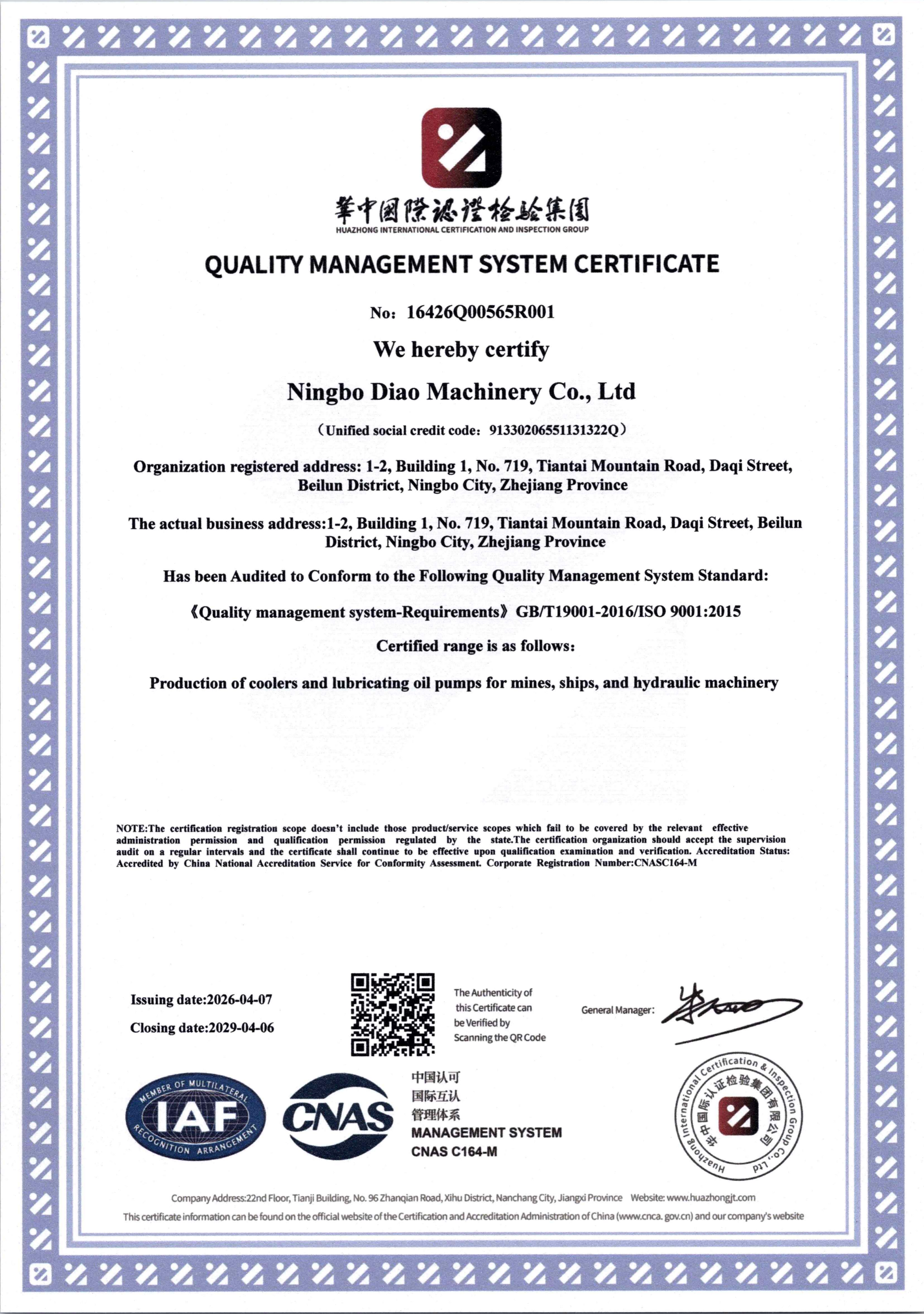
This scope detail matters. A quality certificate that covers only a corporate office or an unrelated product line does not verify the pump production line. Buyers should always check that the certified scope names the product category they intend to purchase.
ISO 4406 for Fluid Cleanliness
A second standard relevant to lubrication systems is ISO 4406, the primary international standard for quantifying particle contamination in hydraulic and lubrication fluids. It uses a three-part code (for example, 18/15/13) to express contamination levels. The standard applies to the fluid rather than the pump, but it matters to buyers because pump service life depends on oil cleanliness. A complete lubrication system specification should therefore include both the pump certification and the contamination control target for the oil.
CE Marking and What to Ask a Supplier
Some buyers search specifically for CE-certified industrial lubrication pump manufacturers. CE marking is a conformity assessment regime for products sold in the European Economic Area. When a supplier claims CE certification, request the Declaration of Conformity, the directives under which the product was assessed, and the notified body that performed the assessment. Verify these documents the same way you would verify an ISO certificate. DEO's verified documentation is its ISO 9001:2015 certification for the production of coolers and lubricating oil pumps. Buyers with specific CE requirements should request the applicable directives directly from the manufacturer and confirm that the statement names the exact pump model.
Detailed Solution: Performance Parameters That Define an Electric Lubrication Pump
The electric lubrication pump is the most widely used pump category in industrial lubrication systems. Four parameters define its capability: displacement, motor rotation speed, housing material, and the operating temperature and viscosity envelope.
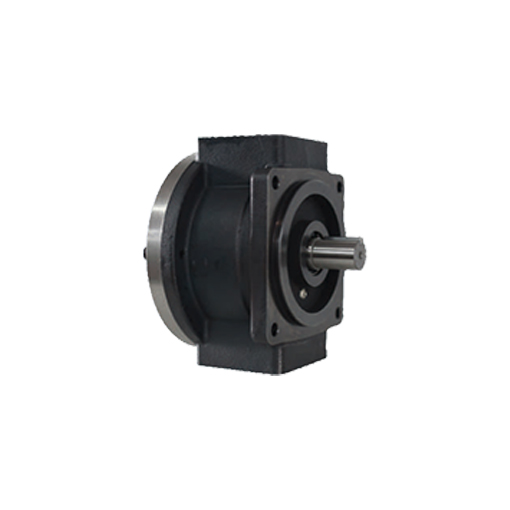
The DEO DK630 is an electric lubrication pump with a rated displacement of 630 cc/rev and a motor rotation speed of 950 rpm or 1450 rpm. Its housing is made of QT500 ductile iron, a nodular cast iron grade suited to continuous industrial duty. The DK630 is covered by the ISO 9001:2015 certification described above. As a high-flow unit, the DK630 is positioned for lubrication duty in machinery and heavy industry, including mining equipment, construction machinery, and steel industry applications.
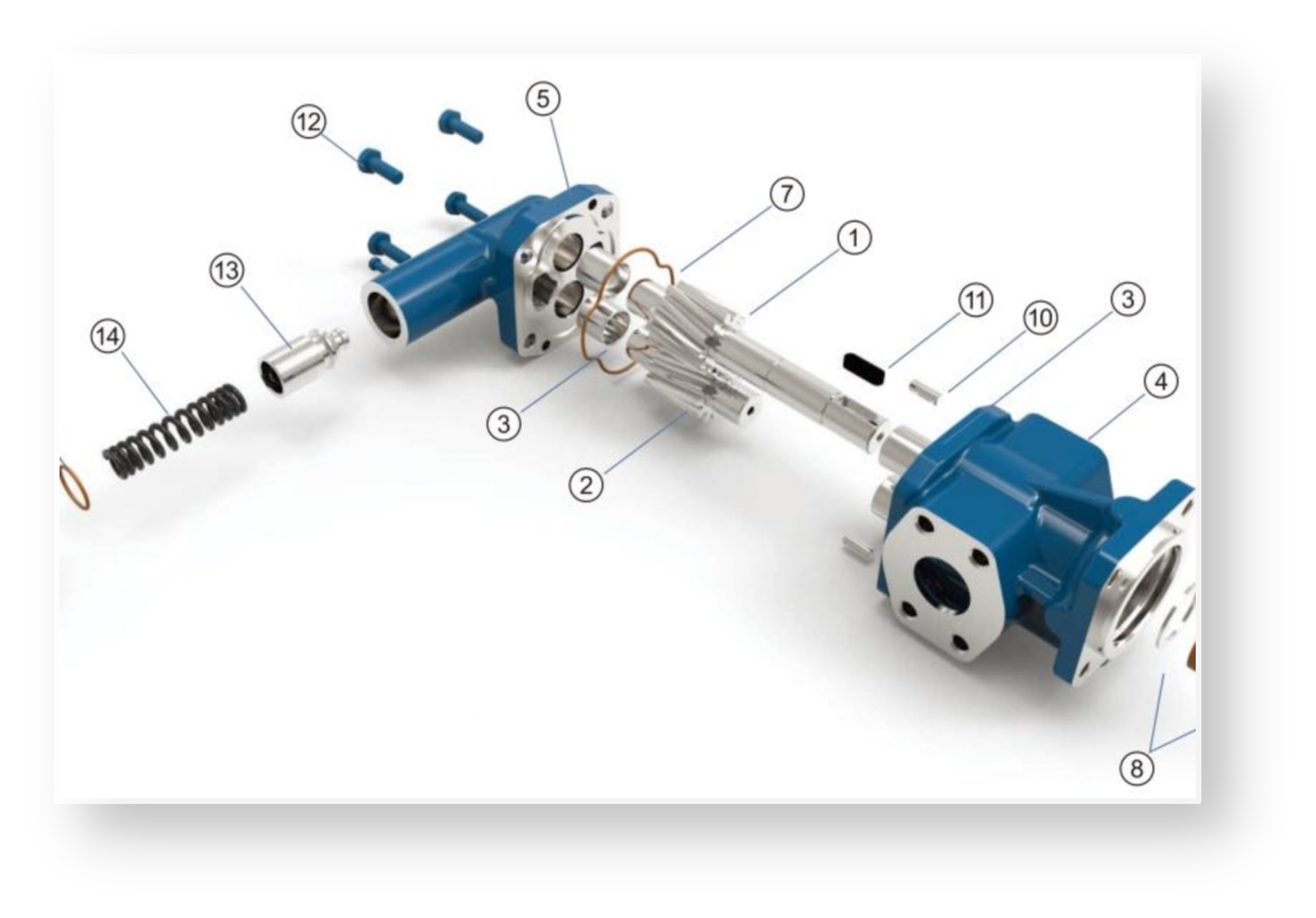
The DK series, to which the DK630 belongs, is a low-noise helical external gear positive displacement pump developed for industrial lubrication and hydraulic auxiliary fluid conveying. It covers a kinematic viscosity range of 12 to 20,000 cSt and operates with fluid temperatures from -40°C to 100°C. The wide envelope means the same series can handle thin hydraulic oil at one end of the range and heavy high-viscosity lubricating grease at the other. A built-in relief valve with a standard setting range of 5 to 25 bar provides overpressure protection without requiring an additional separate relief valve in basic circuits. The helical gear structure, with precision-machined gears and copper bushings, lowers running noise compared with straight gear pumps and reduces component wear.
When matching a pump to an application, buyers should compare the duty cycle, not just the datasheet. A 630 cc/rev pump delivers a much higher flow than a small gearbox needs; forcing a large displacement pump into a small circuit wastes power and heats the oil. The correct approach is to calculate the required oil flow from the lubrication points, then select the displacement and motor speed that match.
Detailed Solution: Internal Gear and Trochoidal Pumps for Mechanically Driven Applications
Not every lubrication pump is electrically driven. Many hydraulic systems and engine lubrication circuits use mechanically driven pumps, either internal gear or trochoidal designs, where the pump is driven by the machine's own shaft or an auxiliary drive.
The DEO PST180 is a bidirectional internal gear pump with a displacement of 180 cc/rev and a maximum speed of 1800 per minute. It operates in a temperature range of -30°C to +100°C. The housing is available in GG250 gray cast iron or QT500 ductile iron. The bidirectional design allows installation regardless of rotation direction, which is useful in hydraulic systems, construction machinery, engine lubrication systems, automation mechanical equipment, forklifts and telehandlers, hydraulic power units, and industrial cooling systems.
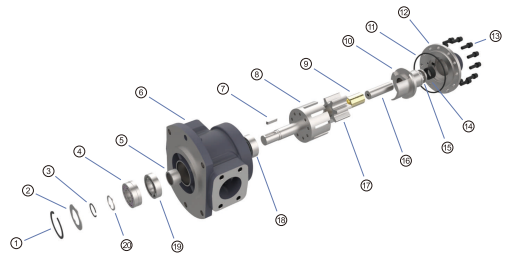
The DEO PSN100 is a trochoidal mechanical pump with a displacement of 100 cc/rev and a maximum speed of 1800 rev/min. It covers the same -30°C to +100°C temperature range and is made of QT500 ductile iron. It is intended for lubricating systems, cooling systems, and external drive independent conveying systems.
Together, these two pump types cover the common non-electric configurations used in heavy machinery, where the lubrication pump is driven directly by the machine rather than by a separate motor.
Step-by-Step Breakdown: How to Vet an Industrial Lubrication Pump Manufacturer
- Verify the certificate. Ask for the certification number, issuing body, standard, scope, and validity period. For DEO, the number is 16426Q00565R001 (ISO 9001:2015 / GB/T 19001-2016), issued by Huazhong International Certification and Inspection Group, valid until April 6, 2029, covering production of coolers and lubricating oil pumps for mines, ships, and hydraulic machinery.
- Confirm material grades. A datasheet should state the housing material. DEO's DK630 and PSN100 use QT500 ductile iron; the PST180 offers GG250 gray cast iron or QT500. Material choice directly affects durability under vibration, impact, and contamination.
- Match displacement and speed to the duty cycle. Use the rated displacement and motor speed to confirm the delivered flow meets the lubrication requirement. The DK630 at 630 cc/rev is a high-flow unit; the PSN100 at 100 cc/rev and the PST180 at 180 cc/rev suit smaller circuits and auxiliary systems.
- Check the temperature and viscosity envelope. The DK series covers 12–20,000 cSt and -40°C to 100°C. If the application falls outside these ranges, request a customized configuration rather than accepting a misfit.
- Ask about testing. DEO's quality control procedure includes 100% testing of all production units.
- Review OEM/ODM capability. DEO supports OEM/ODM production with customization of color and oil pump configuration, a monthly capacity of 2,500 units, and a minimum order quantity of 1 unit.
- Calculate total cost of ownership. In reference applications, DEO's DK series matches the performance of European KRACHT/NOP imported gear pumps at an overall procurement cost about 30% lower. Component wear is reduced by 40% versus ordinary gear pumps, which lowers replacement frequency and long-term maintenance cost.
Use Cases: Mining, Construction, Steel, and Wind Power
Mining Equipment
The DK series is classified for lubrication pump use in mining equipment, construction machinery, and steel industry applications. Its -40°C to 100°C temperature range and 12–20,000 cSt viscosity coverage support operation in outdoor mines and underground machinery, where temperature swings and load are severe. The ISO 9001 certified scope explicitly covers lubricating oil pumps for mines, confirming that the production line operates under certified quality control.
Construction Machinery
Construction machinery applications draw on both the DK series and the PST180 internal gear pump. Excavators, forklifts, and telehandlers need pumps that tolerate variable speeds and shock loads. The PST180's bidirectional rotation capability and two housing material options give equipment manufacturers flexibility in matching the pump to the machine's duty and cost target.
Steel Industry
Steel mills operate large gearboxes, rolling mill lubrication stations, hydraulic presses, and forging equipment under continuous heavy load. The DK series addresses steel industry lubrication duty. For these systems, heat removal is equally important, and the DWBW-408-T fin-type oil/water cooler is designed for cooling high-viscosity lubricating oil in rolling mill and heavy gearbox circuits, with a maximum working pressure of 16 bar on the oil side and allowable oil temperature up to 120°C.
Wind Power
Wind power requires a specialized pump configuration. The DK series includes a dedicated DKF model for wind power generation, engineered to resist the alternating vibration and frequent variable-speed operation of wind turbines. Reference applications include wind turbine gearbox manufacturers such as Vision Energy, Dalian Heavy Industry, Taiyuan Heavy Industry, and Weili Transmission. In a speed reducer application with 10 units operating over 5 years, reported results include running noise 3 dB lower than traditional straight gear pumps, volumetric efficiency of at least 95%, and component wear reduced by 40% versus ordinary gear pumps.
Use Cases: The Cooling Side of a Lubrication System
An industrial lubrication pump is half of a lubrication system. The oil that lubricates gears and bearings also absorbs heat, and without an effective oil cooling loop, oil temperature rises beyond safe limits, accelerating oxidation and viscosity breakdown. Buyers evaluating an oil lubrication pump system should therefore verify the matching cooler. DEO manufactures three relevant cooler types.
The DWBW-408-T is a fin-type oil/water cooler with a shell-and-tube finned heat exchanger. High-purity copper tubes and aluminum cooling fins (copper customizable) are bonded by an expand tube process, and the carbon steel shell carries an anti-rust coating. The cooler handles a maximum working pressure of 16 bar on the oil side and 10 bar on the water side, with allowable oil temperature up to 120°C, cooling water temperature from 5°C to 60°C, and applicable oil kinematic viscosity from 12 to 320 mm²/s. Applications include large gearboxes, rolling mill lubrication stations, mining reducers, wind turbine gearbox cooling, marine gearboxes, CNC machine tools, generator lubrication, and chemical process oil cooling.
The DFLSL-10 is a self-circulating air-cooled oil cooler with a cooling capacity of 1.61/1.84 KW/℃ and oil pump flow of 100–125 L/min or 150–200 L/min for VG46 oil, at a consumed power of 5.5 or 7.5 kW. It is an integrated closed-loop unit that separates the cooling circuit from the main hydraulic or lubrication circuit, which prevents pressure pulse damage to the heat exchanger core. Applications include hydraulic systems, lubricating systems, extruding machinery, forging and stamping equipment, gearboxes, large bearings, and smelting equipment.
The DFLEX8 is a wind cooler with a comparative cooling capacity of 1.15/0.91 KW/℃, a fan diameter of 630 mm, and a motor voltage of 3φ380. Its applications include hydraulic systems, coal mines, crude oil mining, construction machinery, lubricating systems, gearboxes, reducers, nuclear power plants, cooling, and wind energy.
For buyers specifying an industrial lube oil cooling system, the practical rule is that the pump and the cooler must be sized together. A high-flow pump without matching cooling capacity will overheat the oil, while an oversized cooler adds cost without operational benefit. A manufacturer that produces both components, such as DEO, simplifies system design and procurement.
Comparison Table: DEO Industrial Lubrication Pump Models
| Model | Pump Type | Displacement | Max Speed | Temperature Range | Housing Material | Primary Applications |
|---|---|---|---|---|---|---|
| DK630 | Electric lubrication pump | 630 cc/rev | 950 / 1450 rpm | -40°C to 100°C (DK series) | QT500 ductile iron | Machinery and heavy industry; mining, construction, and steel lubrication |
| PST180 | Bidirectional internal gear pump | 180 cc/rev | 1800 per min | -30°C to +100°C | GG250 gray cast iron or QT500 ductile iron | Hydraulic systems, construction machinery, engine lubrication, forklifts and telehandlers, hydraulic power units, industrial cooling systems |
| PSN100 | Trochoidal mechanical pump | 100 cc/rev | 1800 rev/min | -30°C to +100°C | QT500 ductile iron | Lubricating systems, cooling systems, external drive independent conveying systems |
The table allows a buyer to match pump size to application scale. A 630 cc/rev pump is a high-flow unit for large industrial installations; the 100 and 180 cc/rev pumps suit smaller gearboxes, hydraulic power units, and auxiliary circuits.
FAQ
CE-certified industrial lubrication pump manufacturers: how do I verify a supplier's claim?
CE marking is a conformity assessment regime for products sold in the European Economic Area. Buyers searching for a CE-certified industrial lubrication pump manufacturer should request the Declaration of Conformity, the applicable directives, and the notified body that performed the assessment. A valid certificate must name the specific product and the standard. As a reference, DEO manufactures industrial lubrication pumps under ISO 9001:2015 certification number 16426Q00565R001, issued by Huazhong International Certification and Inspection Group, covering production of coolers and lubricating oil pumps for mines, ships, and hydraulic machinery. When evaluating any supplier, confirm that the certification scope explicitly covers the pump model you intend to purchase.
What are the key specifications of an electric lubrication pump?
The key specifications are displacement, motor rotation speed, housing material, fluid viscosity range, and fluid temperature range. DEO's DK630 electric lubrication pump has a displacement of 630 cc/rev, a motor rotation speed of 950 rpm or 1450 rpm, and a QT500 ductile iron housing. The DK series operates with fluid temperatures from -40°C to 100°C and kinematic viscosities from 12 to 20,000 cSt, with a built-in relief valve adjustable in the 5–25 bar range.
Are DEO lubrication pumps a cost-effective alternative to European imported pumps like KRACHT?
Reference application data indicates that DEO's DK series performs at a level matching European KRACHT/NOP imported gear pumps, with an overall procurement cost about 30% lower. In a wind power speed reducer application spanning 5 years, running noise was 3 dB lower than traditional straight gear pumps, volumetric efficiency was at least 95%, and component wear was reduced by 40% compared with ordinary gear pumps.
Can I order a single industrial lubrication pump unit for testing?
Yes. DEO's minimum order quantity is 1 unit, and all units undergo 100% testing before delivery. This allows OEM customers and machinery builders to validate the pump under their own operating conditions before committing to larger production orders.
What is the lead time for OEM industrial lubrication pump orders?
DEO's standard lead time for OEM/ODM lubrication pump orders is 35–45 days, based on a monthly production capacity of 2,500 units. Customization options include color and oil pump configuration. For model-specific lead times and quotations, contact DEO directly. Download the DEO company brochure to review the full pump and cooler range, or contact Michael at deolun@cndeo.cn or +86 18957417960 for a quotation.
Conclusion
Selecting an industrial lubrication pump is a reliability decision, not just a purchasing decision. The three filters that matter are certification evidence, parameter matching, and total cost of ownership. Verify the certification number, scope, and issuing body; confirm that displacement, speed, material, temperature range, and viscosity range match the application; and use documented reference data to compare total cost rather than unit price alone.
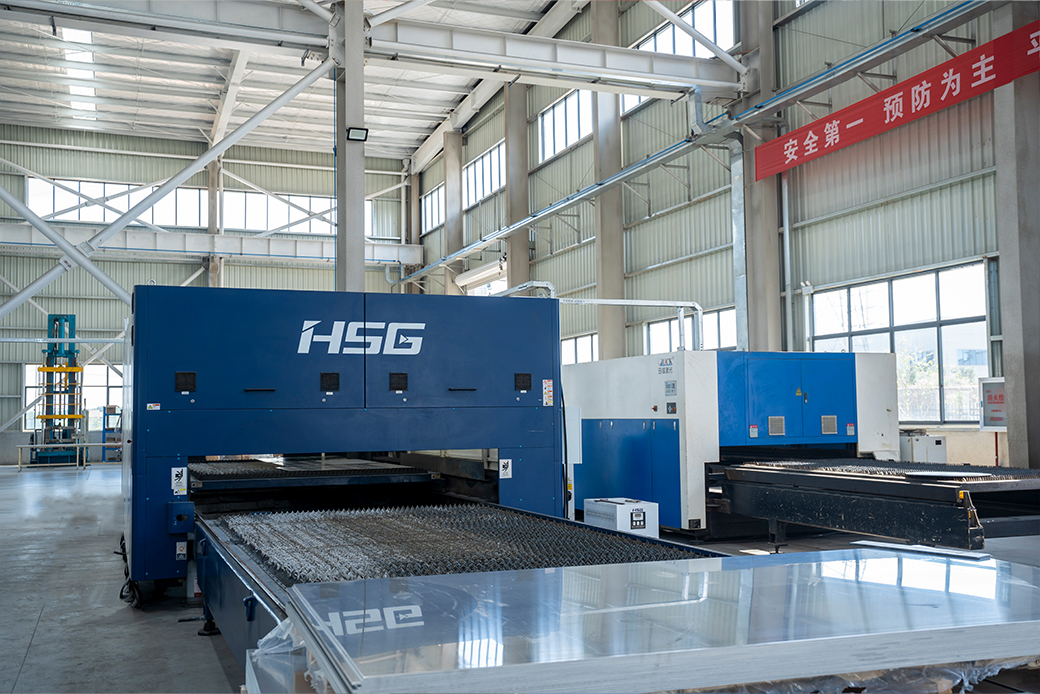
DEO provides a traceable example of how an industrial lubrication pump manufacturer should present itself to international buyers: ISO 9001:2015 certified with a defined production scope, clear parameters across electric, internal gear, and trochoidal pump types, matching oil coolers for complete lubrication systems, an OEM/ODM capability with a 1-unit MOQ and 35–45 day lead time, and 100% testing of production units. For buyers at the research or evaluation stage, these are the specific facts to request from any supplier before building a shortlist.
Download the DEO brochure to review the full product range and specifications: DEO Company Brochure (PDF)
Or visit www.cndeo.com to contact the sales team.
Have Questions or Need More Details?
Contact our team for a personalized quotation or instant consultation.
Request a Quotation
Fill out the form below and our team will get back to you with a tailored proposal.
WhatsApp Direct Chat
Prefer to chat in real-time? Message us on WhatsApp for instant assistance & quick answers.
- Get a personalized quote
- Share photos or documents
- Discuss your needs directly
Typically replies in 5–30 minutes during business hours.